
What Buyers Should Know About a Universal 300W 24V–72V Charger for E-Bikes and E-Scooters
When buyers need a unified charging platform to support different electric mobility devices or battery projects, they often consider a universal 300W 24V–72V charger for e-bikes and e-scooters. It falls into a highly practical power range: more powerful than many small portable chargers while still compact enough for workshops, distributors, service teams, and OEM replacement projects.
For B2B buyers, a charger is much more than just an accessory. It affects charging time, battery compatibility, heat dissipation, after-sales service, and the safety of the battery system in real-world use. Choosing the wrong charger may not cause obvious problems immediately, but over time it can shorten battery life, generate customer complaints, or even increase return costs.
This 300W charger is typically used for e-bikes, e-scooters, mobility aids, light electric vehicles, and low-voltage battery systems. Depending on the configuration, it supports 24V, 36V, 48V, 60V, or 72V batteries. However, the term "universal" should be understood with caution. It does not mean that one charger can safely charge every battery. The correct version must still match the battery voltage, battery chemistry, charging current, connector type, polarity, and the requirements of the BMS (Battery Management System).
Why Power (Wattage) Alone Is Not Enough
Many buyers first ask for a 300W e-bike charger, but power is only one factor in the selection process.
The 300W rating simply describes the charger's output power and does not prove that it is suitable for lithium-ion, LiFePO4, or lead-acid batteries.
Different battery chemistries require different charging methods. Chargers for lithium-ion, LiFePO4, and lead-acid batteries may look almost identical on the outside, but their charging voltage profiles and charging strategies differ significantly. If the charging profile does not match the battery chemistry, the battery may not charge correctly or may age faster than expected.
Therefore, buyers should not select a charger solely based on the "300W" or "universal" label. It is much more practical to confirm the complete electrical specifications before placing an order.
What Should Be Confirmed Before Purchasing
Before selecting a universal 300W 24V–72V charger, it is recommended to verify the following:
1. Battery nominal voltage
2. Full charging voltage
3. Battery chemistry
4. Required charging current
5. Battery BMS charging current limit
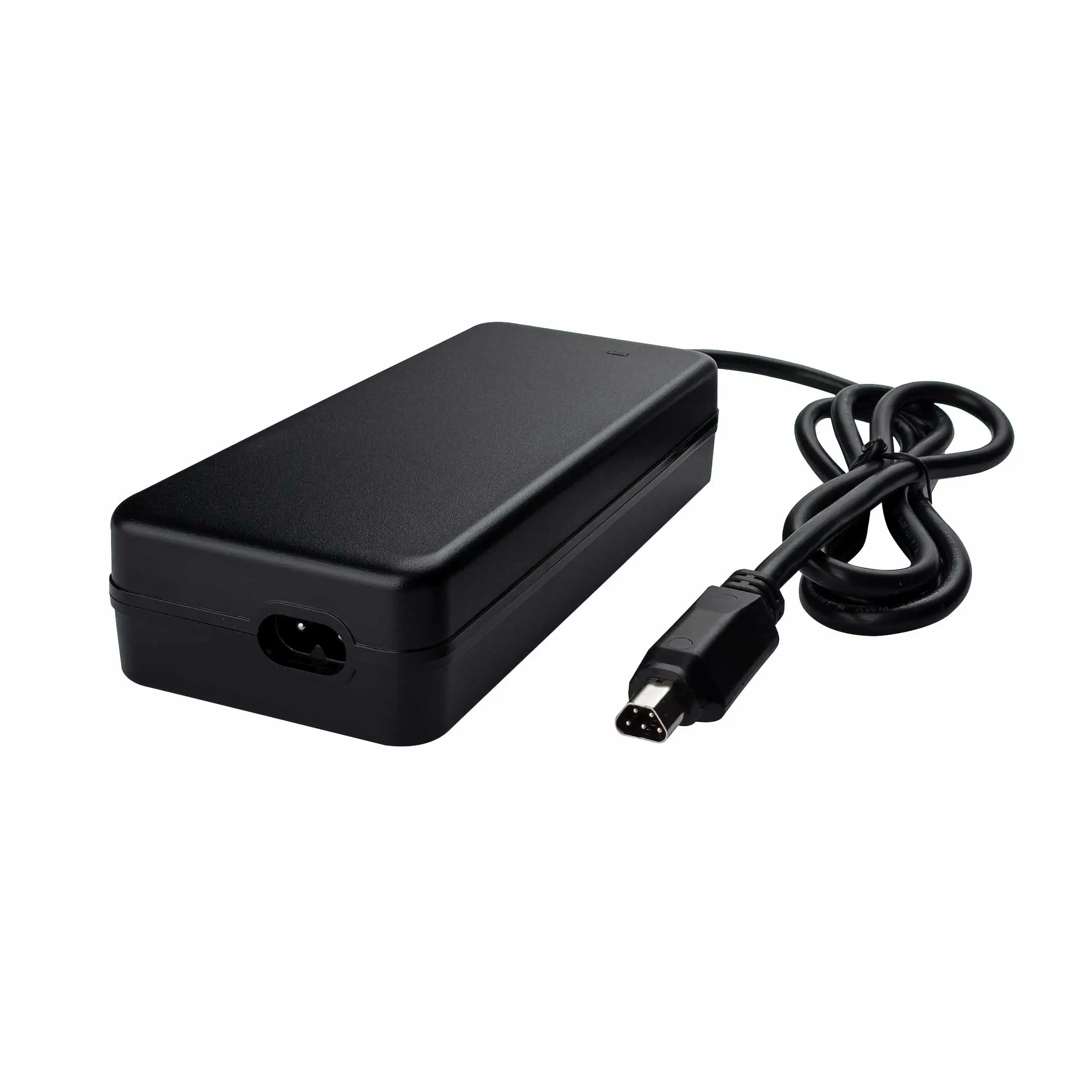
6. Connector type
7. Connector pin assignment
8. Polarity
9. AC input plug type
10. Cable length
11. Cooling method
12. Label, enclosure, and packaging requirements
For example, a 36V lithium battery typically uses a different full charging voltage than a 36V lead-acid battery system. Likewise, 48V lithium, 48V LiFePO4, and 48V lead-acid batteries each require different charger settings.
If a supplier simply states that it is a "universal 24V–72V charger" without confirming the specific output version, buyers should request detailed technical specifications.
The Correct Connector Is Equally Important
An incorrectly matched connector is one of the most common causes of charging problems.
Two chargers may appear to use nearly identical connectors while having different polarity or pin configurations.
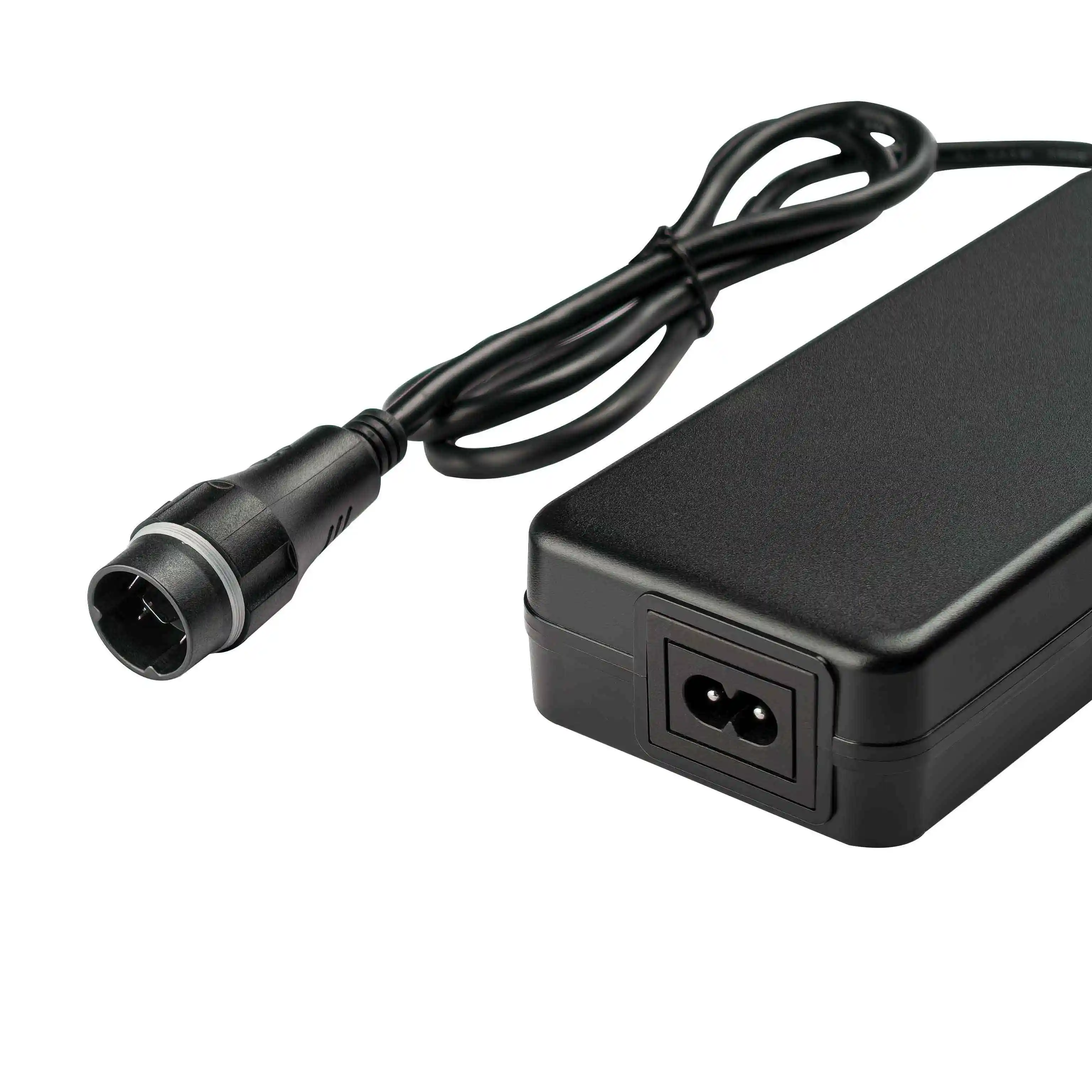
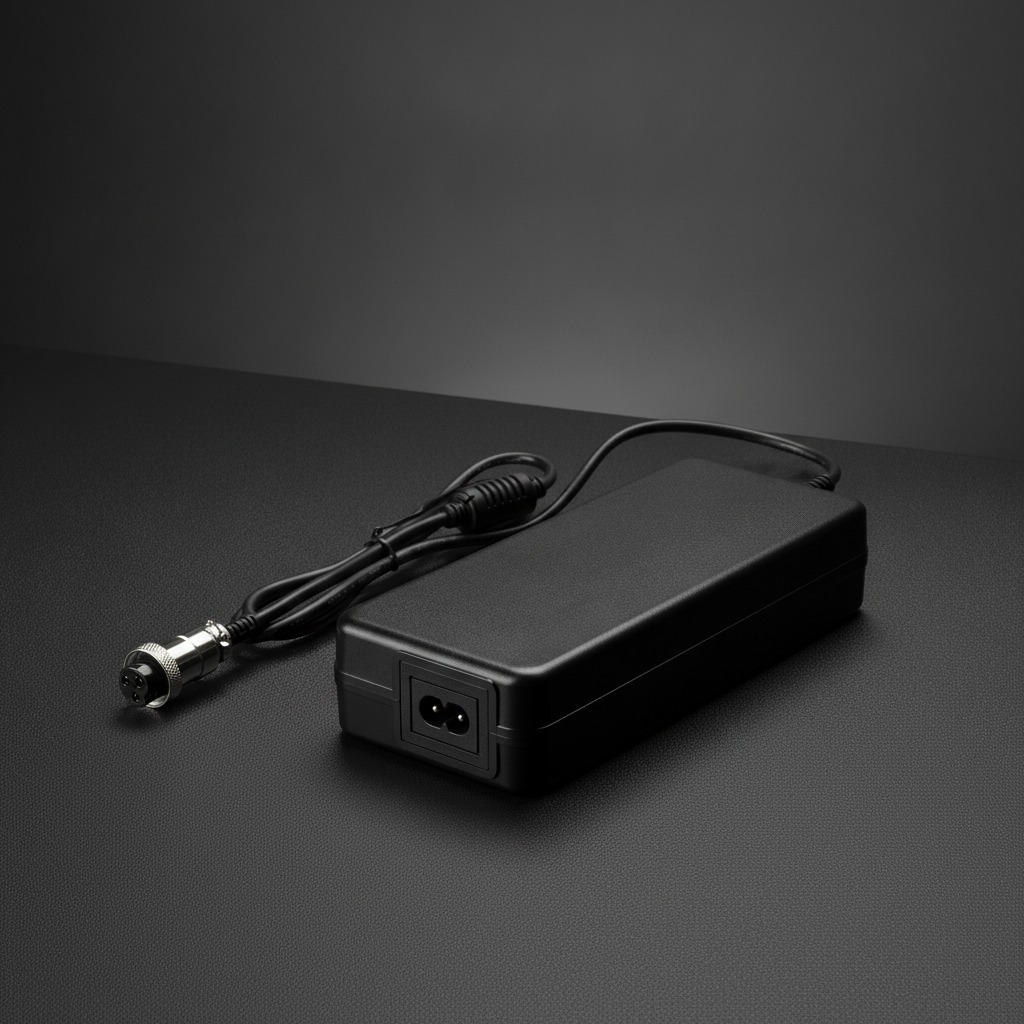
For e-bikes and e-scooters, buyers may encounter connector types such as:
- GX16 connector
- XLR connector
- Aviation connector
- DC barrel connector
- Anderson connector
- RCA connector
- Custom wiring harnesses
A charger with the wrong connector may not function at all. More seriously, incorrect polarity can damage the battery, charger, or BMS.
For OEM and wholesale orders, connector details should be confirmed with clear photos, drawings, or sample wiring harnesses before production begins.
If the charger is intended to be sold as a replacement charger, the supplier should also have a clear understanding of the original battery system. Even externally similar models within the same product category may not be compatible.
Why Cooling Design Matters
A 300W charger generates significantly more heat than lower-power chargers with lower charging currents.
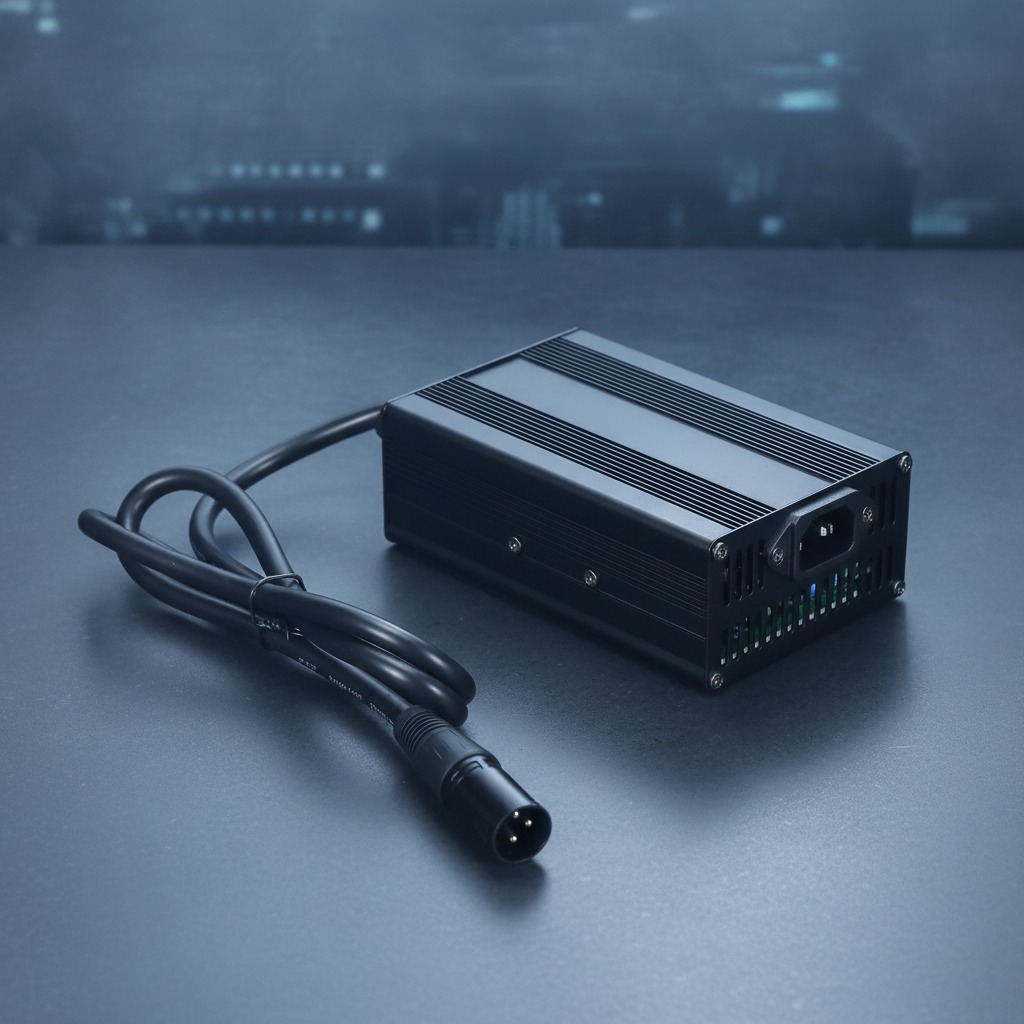
A visible metal enclosure, heat sink, or finned aluminum housing generally improves heat dissipation. This is especially important for chargers used in workshops, fleet maintenance, warehouses, or daily charging operations.
However, even a well-designed charger requires adequate ventilation.
If the charger operates inside an enclosed compartment, under a seat, or near other heat sources, the actual operating temperature may be much higher than expected.
For production projects, buyers should ask about:
- Operating temperature range
- Protection features
- Whether testing has been performed under real load conditions
A good charger supplier should not only showcase the enclosure but also explain the principles behind its cooling design.
Lead-Acid, Lithium, and LiFePO4 Chargers Are Not Interchangeable
Although lead-acid and lithium battery chargers may have the same power rating, they are not automatically interchangeable.
Lead-acid batteries generally require a different charging method than lithium batteries. Likewise, LiFePO4 chargers must follow the charging voltage and cutoff strategy required for that chemistry.
If a supplier claims that a charger supports multiple battery chemistries, buyers should also clarify:
- Whether the output version is fixed
- Whether it is adjustable
- Whether it can be customized according to production requirements
"Universal" may refer to a product platform, but actual technical compatibility must be verified individually for each project.
For OEM projects, the safest approach before approving a sample is to provide:
- Battery specifications
- Original charger label
- Connector photos
- Actual application scenario
What Applications Is a 300W Charger Suitable For?
A 300W charger for e-bikes or e-scooters is suitable for applications requiring more charging power than small portable chargers but not large industrial chargers.
Examples include:
- Replacement chargers for e-scooters
- E-bike battery charging projects
- Maintenance chargers for mobility aids
- Battery testing in workshops
- Fleet maintenance kits
- OEM battery pack projects
- Wholesale replacement charger projects
- Low-voltage devices using lithium or lead-acid batteries
For end users, the charger must precisely match the battery.
For maintenance or after-sales service applications, greater compatibility may be advantageous, but safety verification should always be performed.
Questions OEM and Wholesale Buyers Should Ask
When working with an OEM charger supplier, buyers should not focus only on price.
A reliable supplier should be able to confirm:
- Input voltage range
- Output voltage
- Charging current
- Charging profile
- Connector type
- Protection features
- Customization options
For wholesale purchasing, product consistency and performance are equally important.
A successful sample test alone is not enough.
Buyers also need:
- Stable mass production
- Repeatable specifications
- Clear product labeling
- Reliable packaging
OEM buyers should specifically ask:
- Can the output voltage and charging current be customized?
- Are lithium, LiFePO4, or lead-acid battery projects supported?
- Can the connector type and cable length be customized?
- Are private-label labels and custom packaging available?
- What protection features are built in?
- What tests are performed before shipment?
- What is the minimum order quantity?
- Is long-term supply capability available?
These questions help prevent costly mistakes before placing a large order.
Common Mistakes
The first mistake is focusing only on power.
A 300W charger must still match the following parameters:
- Voltage
- Battery chemistry
- Charging current
- Connector type
- Polarity
The second mistake is assuming that only the connector matters.
It does not—externally similar connectors may have completely different wiring.
The third mistake is using the charger in poorly ventilated environments without considering heat dissipation.
Excessive temperatures shorten charger lifespan and increase the risk of after-sales issues.
The fourth mistake is treating lithium, LiFePO4, and lead-acid chargers as identical products.
Unless the supplier confirms the correct charging profile, they are not the same.
The fifth mistake is placing a bulk order without testing with an actual battery pack.
Drawings and labels are helpful, but a properly tested and verified sample remains the safest solution.
Practical Purchasing Recommendations
When evaluating a universal 300W 24V–72V charger for e-bikes and e-scooters, start with the actual battery system.
Confirm:
- Nominal voltage
- Full charging voltage
- Battery chemistry
- BMS limitations
- Connector type
- Polarity
- Charging environment
Then ask the supplier to recommend the appropriate charger version.
For OEM and wholesale buyers, the best approach is generally to obtain a suitable sample charger first and test it under real operating conditions.
This helps reduce returns, improve product reliability, and make future procurement more efficient.
JuxonPower supports projects involving e-bike chargers, e-scooter chargers, lithium-ion chargers, LiFePO4 chargers, lead-acid chargers, as well as OEM charger and wholesale projects.
If you need advice regarding a universal 300W 24V–72V charger, please provide the following information for a compatibility evaluation:
- Photo of the battery label
- Original charger specifications
- Close-up photo of the connector
- Planned order quantity
- Customization requirements
Product Structure and Design
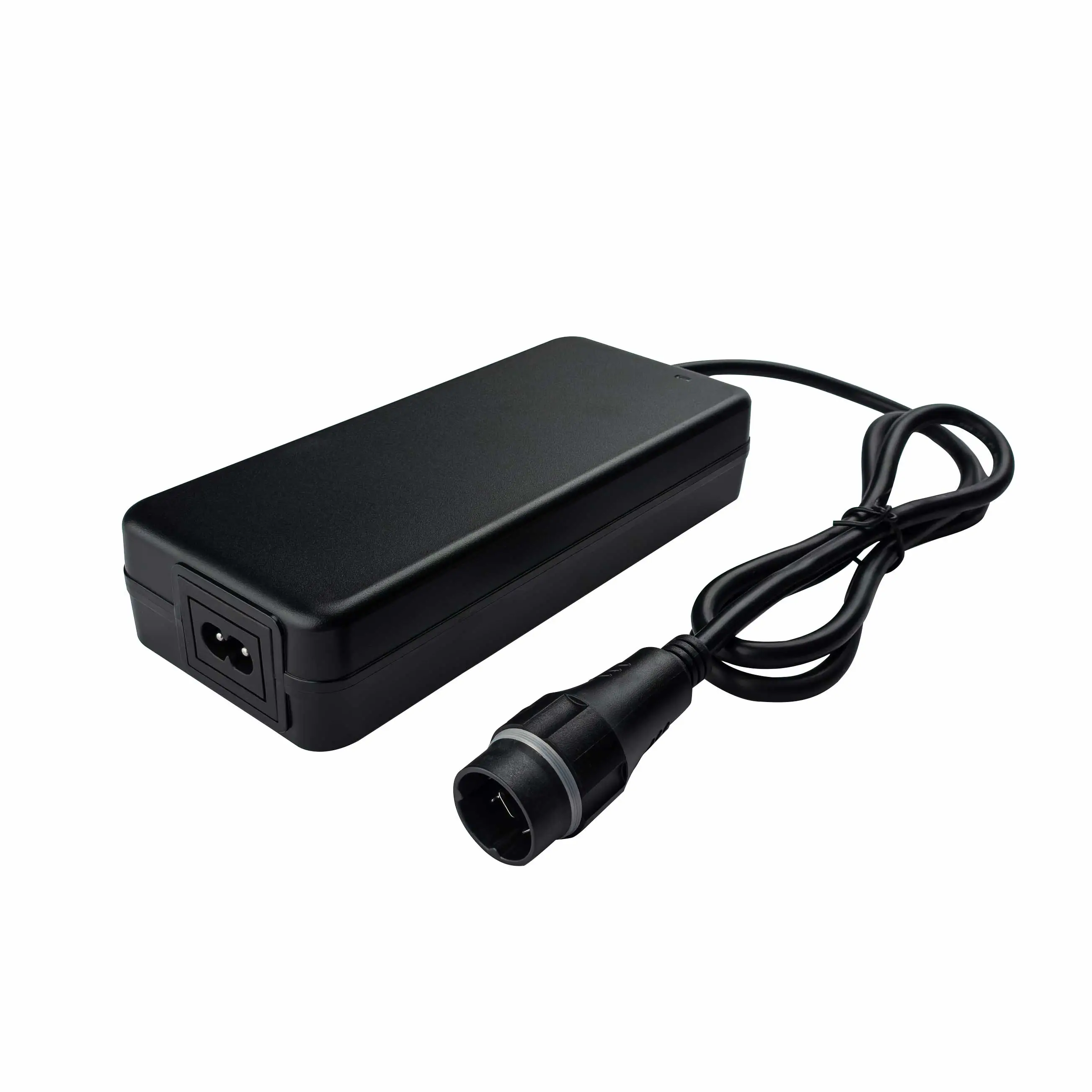
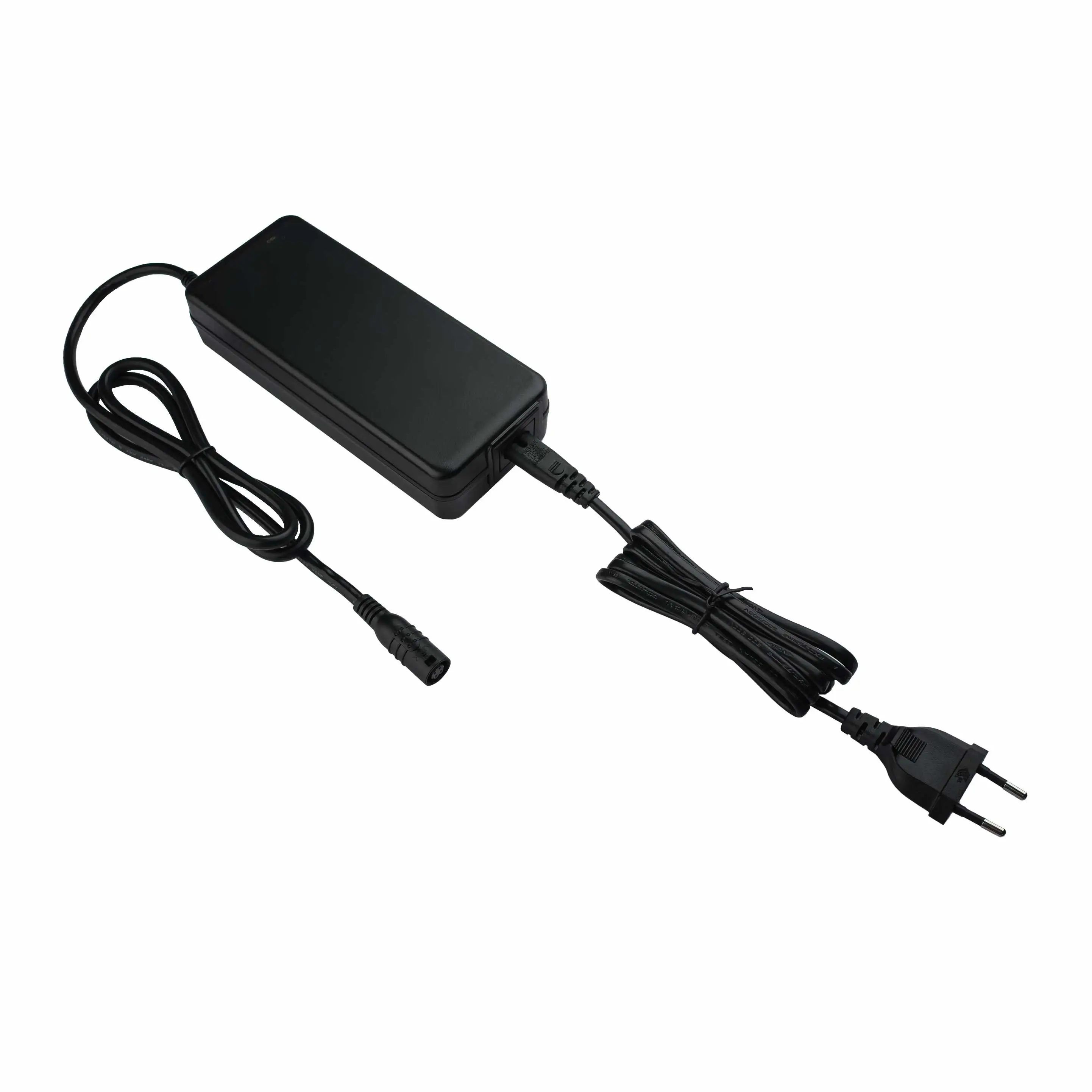
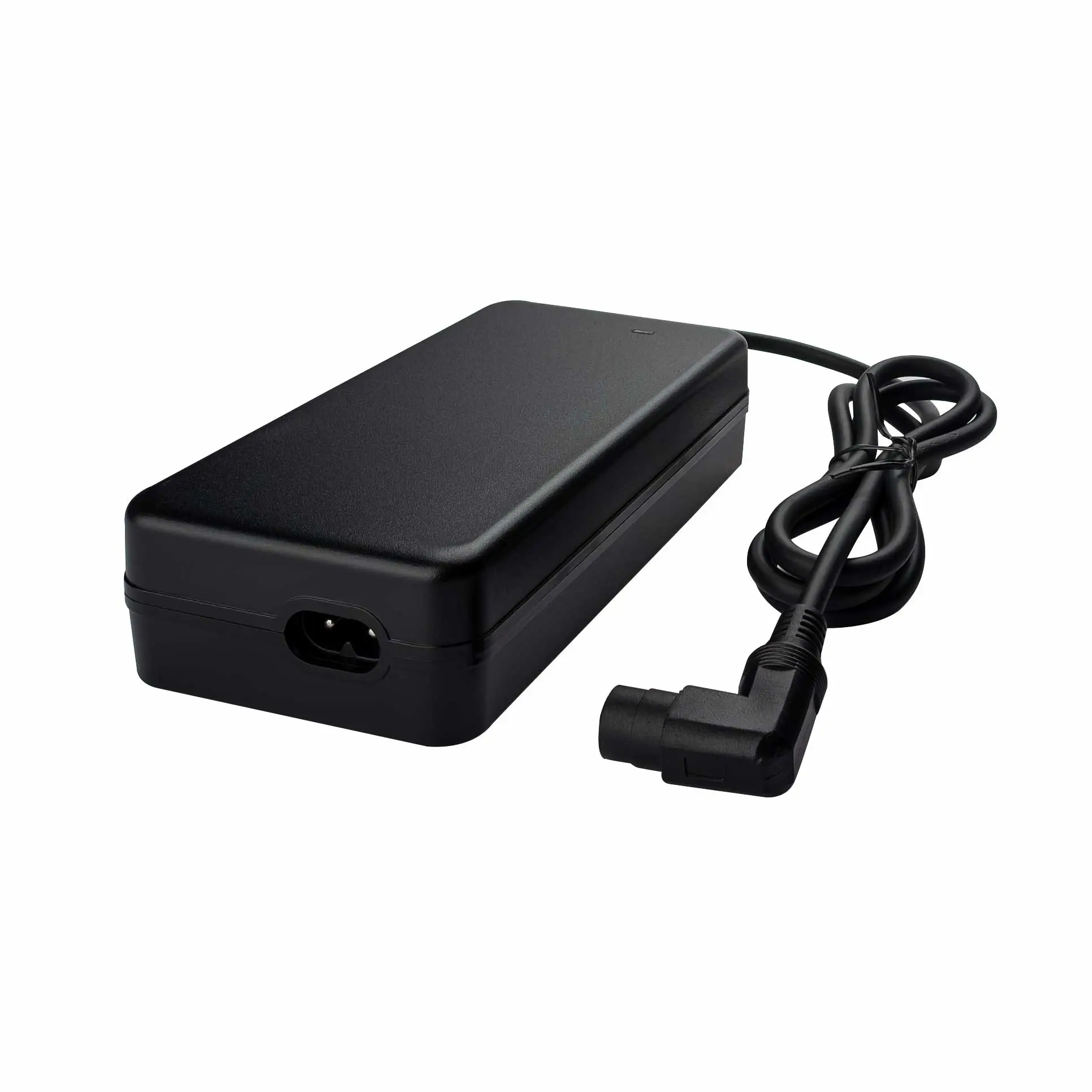
This charger features a durable aluminum enclosure with a compact rectangular design. Compared with plastic-enclosure chargers or open-frame power supply modules, the aluminum housing provides greater structural strength, cleaner installation, and better heat dissipation. The finned metal housing combined with an internal cooling fan effectively controls temperature rise during extended charging sessions, which is especially important for a 300W e-bike charger used daily or commercially.
The product features an enclosed power supply charger design with a permanently attached output cable and supports various customizable connector types. Depending on project requirements, XLR, XT60, DC plugs, or other OEM-specific connector types can be used. Cable length, connector type, product labels, and packaging can also be customized for different markets and customer requirements.
Key Specifications
Rated Power: 300W
Input Voltage: 100VAC–240VAC, 50Hz/60Hz
Compatible Battery Types: Lithium-ion batteries, LiFePO4 batteries, and lead-acid battery packs
Available Voltage Versions: 12V, 24V, 36V, 48V, 60V, and 72V
Efficiency: Up to 90%
Net Weight: Approximately 1 kg
Dimensions: 137 × 90 × 51 mm
Operating Temperature: -20°C to +40°C
Storage Temperature: -40°C to +80°C
Operating Humidity: 5%–95% RH (non-condensing)
Safety Certifications: CE, RoHS
Packaging: 12 units per carton
Voltage and Battery Compatibility
This 300W e-bike charger can be configured for various battery voltage platforms.
Common charging voltages for lithium batteries include:
- 25.2V
- 29.4V
- 33.6V
- 42.0V
- 50.4V
- 54.6V
- 58.8V
- 63V
- 67.2V
- 71.4V
- 84V
- 88.2V
Therefore, it is suitable for buyers seeking chargers for 24V, 36V, 48V, 60V, or 72V batteries used in e-bikes, e-scooters, and mobility aids.
Before placing an order, please confirm:
- Battery chemistry
- Nominal voltage
- Charging current
- Connector type
- Polarity
Especially for lithium-ion chargers used with a specific BMS, the correct voltage and connector are critical.
Protection Features and Charging Performance
This aluminum-enclosure battery charger includes the following protection features:
- Overcurrent protection
- Overvoltage protection
- Overtemperature protection
- Short-circuit protection
- Reverse polarity protection
These features improve charging safety and reduce the risk of equipment damage caused by incorrect connections or abnormal operating conditions.
In addition, the charger uses:
- Low inrush current
- LLC resonant soft-switching technology
- Synchronous rectification
to achieve stable output performance and low ripple.
For OEM battery charger projects, these technical details are particularly important when buyers require consistent performance across multiple production batches.
Applications
This 300W charger for e-scooters and e-bikes is suitable for:
- E-bike battery packs
- E-scooter battery packs
- Mobility aids
- Battery replacement projects
- Repair workshops
- Spare parts wholesale
It is also an ideal choice for OEM buyers who require a compact metal-enclosure charger with custom connectors, labels, packaging, or specific output voltages.
Typical users include:
- E-bike brands
- E-scooter brands
- Battery pack manufacturers
- Distributors
- Maintenance and service companies
- Accessory dealers
If you need a more powerful product than a typical small 2A plastic-enclosure charger, this 300W e-bike charger provides higher charging performance while maintaining a compact design and easy integration.
Customization Options
OEM and wholesale customization options include:
- Output voltage
- Charging current
- AC plug
- DC plug
- Cable length
- Product labels
- Enclosure color
- Packaging
If you already have a battery pack or an original charger as a sample, you can provide the battery label, connector photos, and desired output specifications so that we can recommend the appropriate configuration.
Buyer Checklist
Before selecting this 300W e-bike charger, please confirm:
- Battery voltage
- Battery chemistry
- Required charging current
- Connector type and pin polarity
- Cable length
- AC plug standard
- Label and packaging requirements
- Order quantity
Minimum Order Quantity (MOQ)
The minimum order quantity is 100 units.
For OEM orders, please specify the required voltage, battery type, connector requirements, and target market so that we can recommend the most suitable charger configuration.