
Why buyers look for a custom battery charger manufacturer in the first place
When a standard charger no longer fits the product, the search usually shifts to a custom battery charger manufacturer. That can happen for a long list of practical reasons: a battery pack needs a different charge profile, the enclosure leaves no room for an off-the-shelf brick, the connector is proprietary, or the product must work in a specific regional power environment. For sourcing teams and engineers, the real question is not simply who can build a charger. It is who can build one that fits the battery chemistry, the device packaging, and the service expectations without creating downstream reliability problems.
That matters because chargers are often treated as a small accessory right up until they cause warranty claims, field failures, or compliance delays. In many product lines, the charger is the first thing a customer touches and the last thing an engineer wants to revisit after launch.
What a custom charger project usually starts with
A useful starting point is to separate the electrical requirement from the physical one. The electrical side covers battery chemistry, charge voltage, charge current, protection behavior, and whether the system needs a simple AC/DC adapter or something more controlled. The physical side covers the housing, cable, connector, strain relief, and any restrictions on size or mounting.
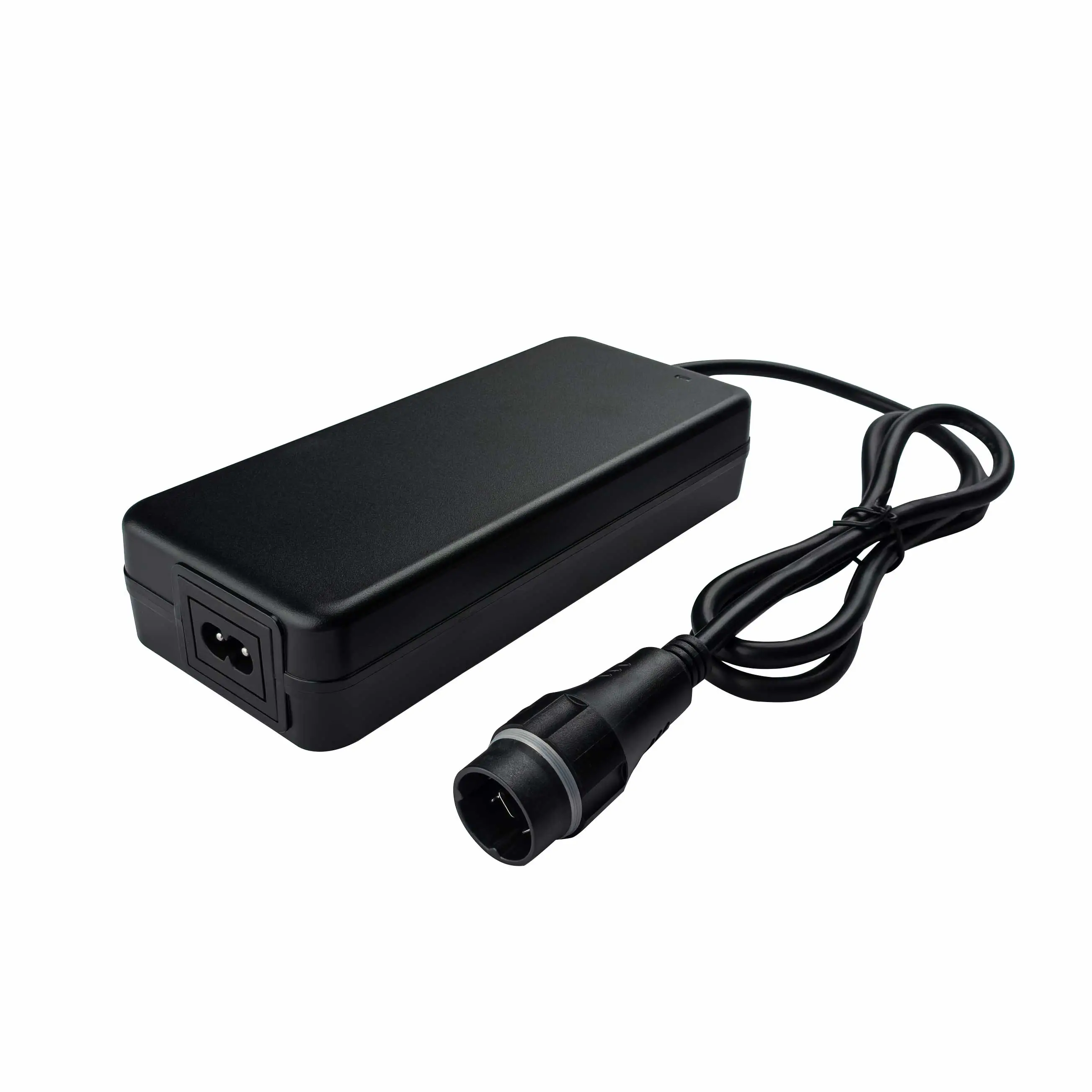
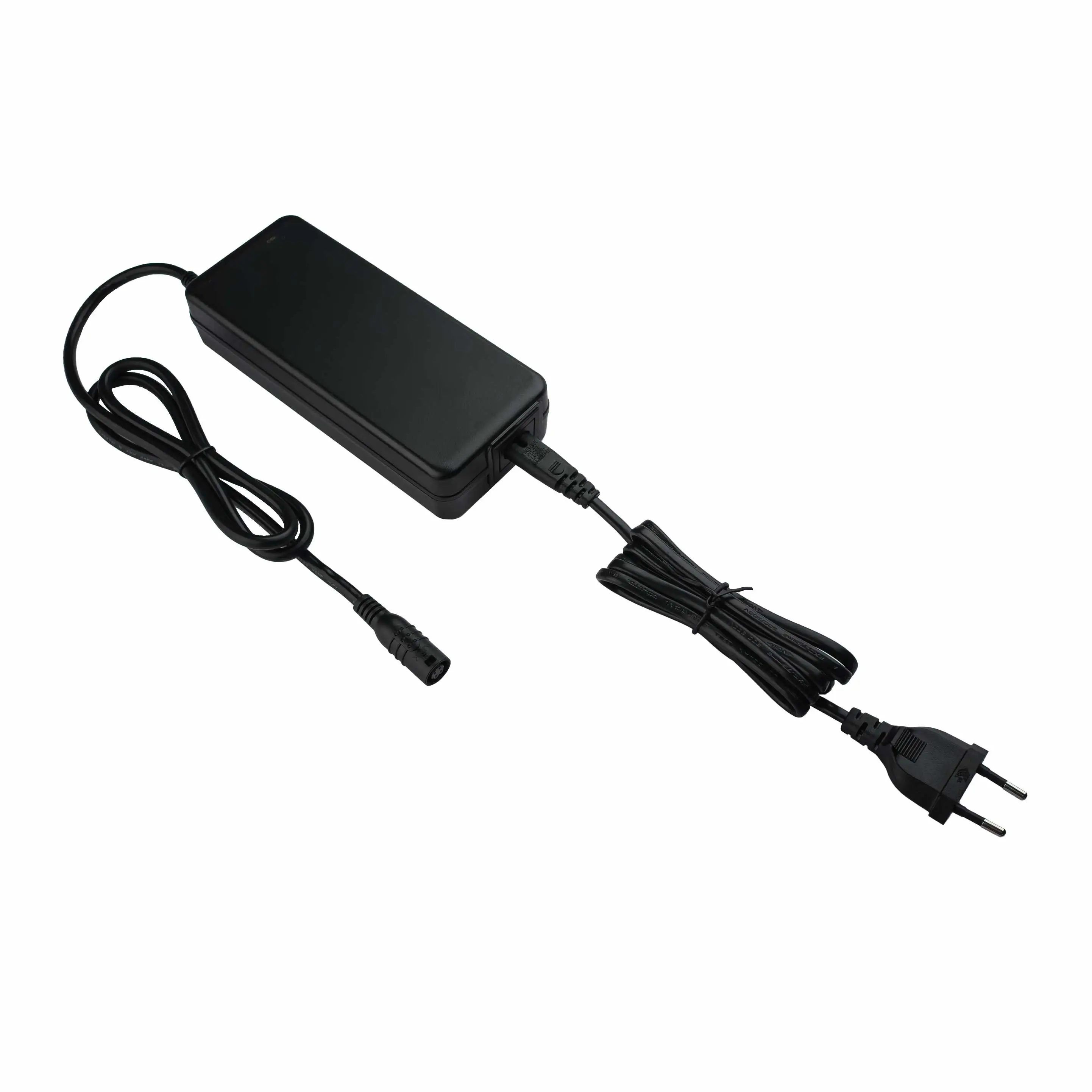
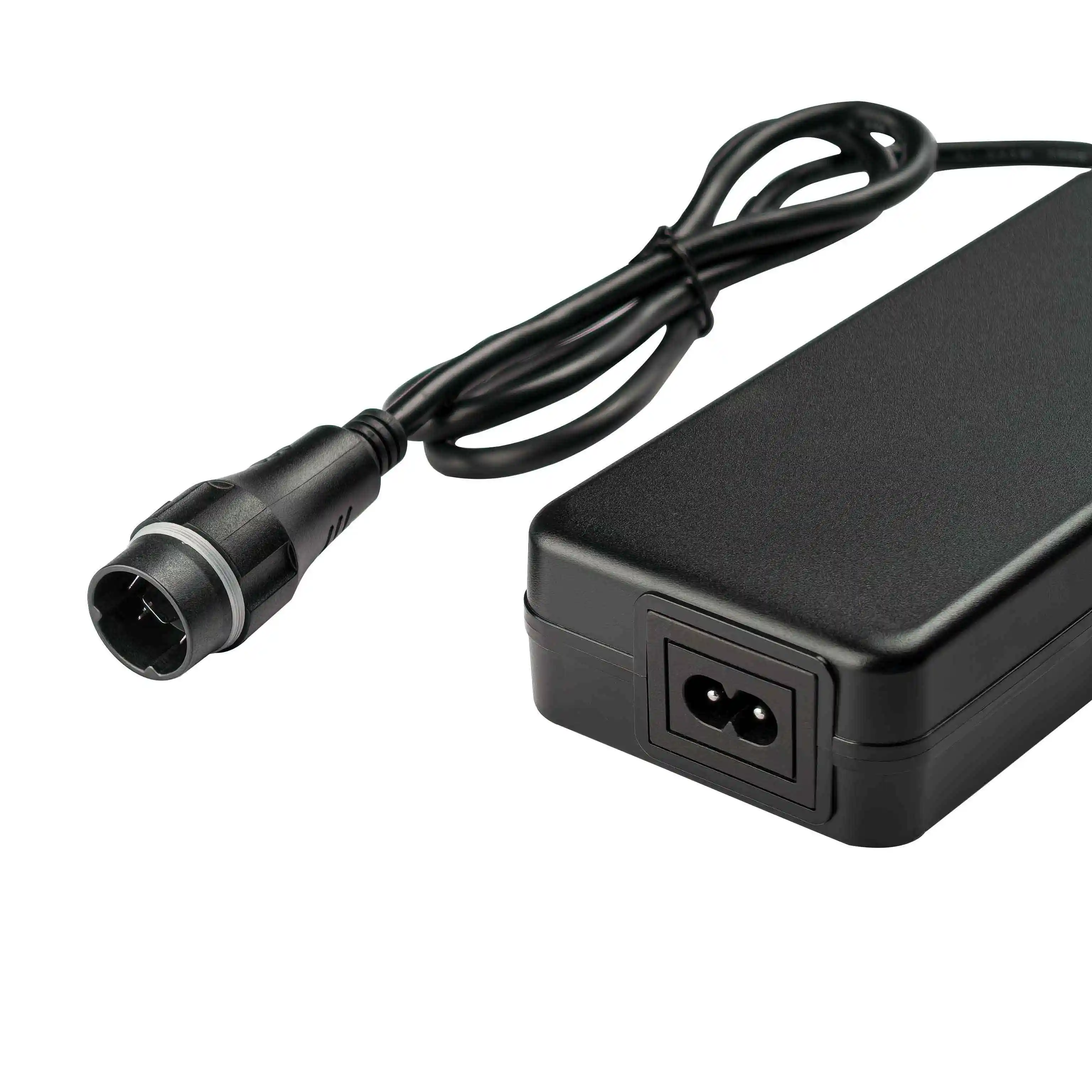
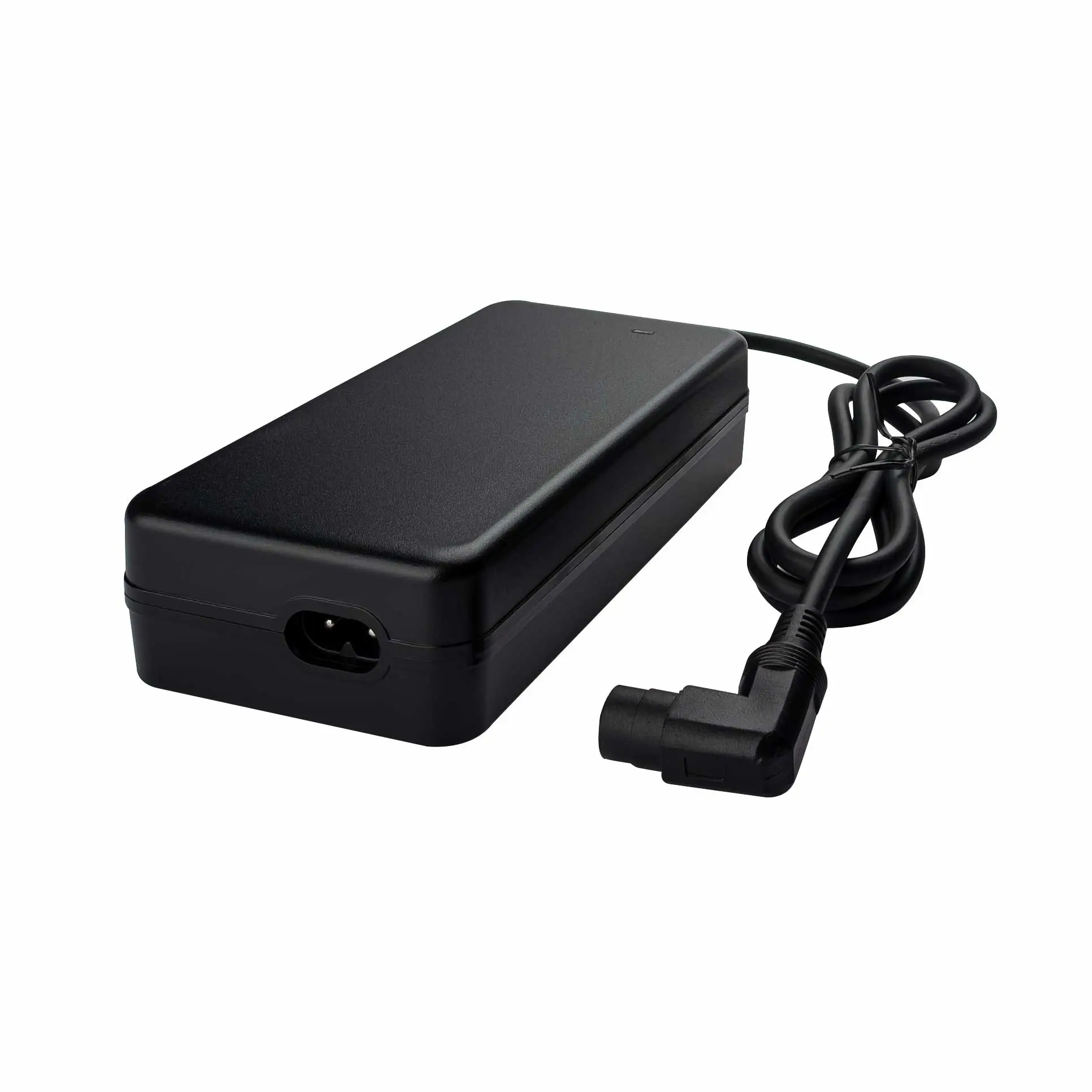
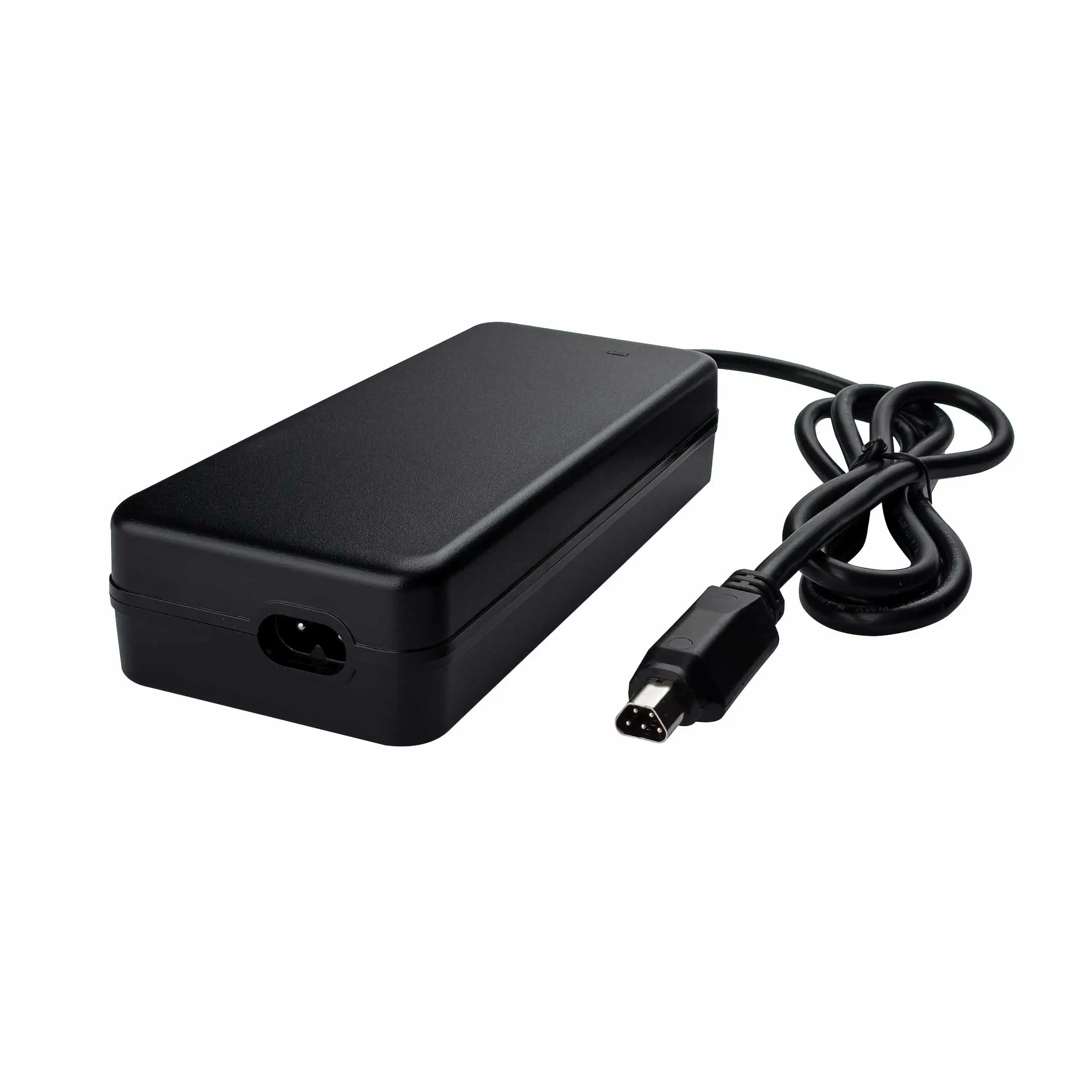
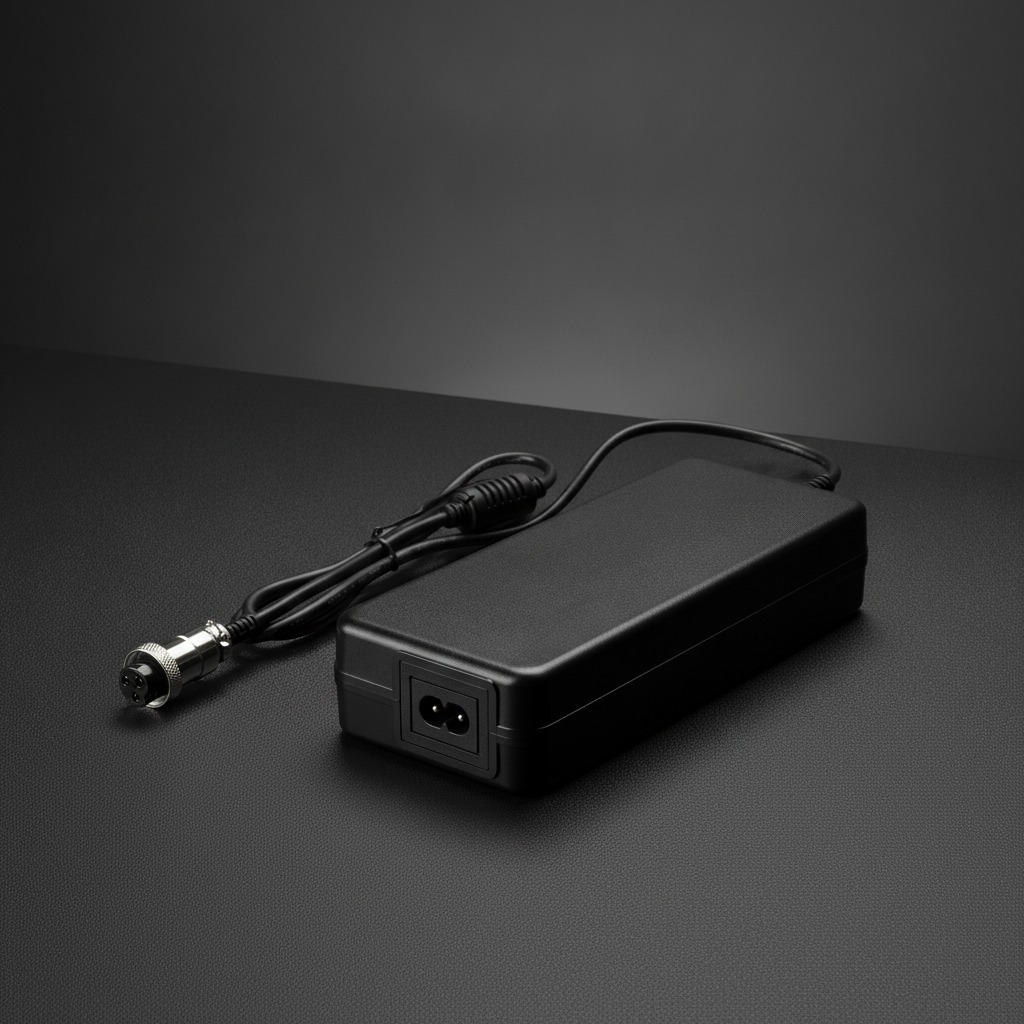
The product image data here points to a compact inline power brick with a black rectangular plastic enclosure, a ribbed top surface, an integrated cable, and a two-pin IEC-style figure-8 AC inlet. That is a familiar form factor in consumer and light industrial electronics. It is not enough, by itself, to identify output voltage or current, and that is exactly the kind of caution a buyer should keep in mind. A charger can look ordinary on the outside and still differ dramatically in output behavior on the inside.
Key details a buyer should define early
Before talking to a supplier, teams should pin down:
The battery chemistry and pack configuration
The required charging current and target voltage
Whether the unit must charge while the device is running
The connector type and cable length
Operating environment, including heat, vibration, and indoor versus outdoor use
Target market requirements for regional mains input
That list sounds basic, but missed details here are what create redesign loops later.
Where a custom battery charger differs from a standard adapter
A standard adapter often provides fixed low-voltage DC for a device. A custom battery charger may need more than that. It may need staged charging, current limiting, reverse protection, temperature sensing, or communication with the battery pack. Even when the end product uses a simple wall adapter style enclosure, the internal design can be much more demanding than the outside suggests.
For example, a 24V 2A lithium battery charger might look like a routine power brick to a nontechnical buyer, but 24V systems can still vary in pack architecture, acceptable charge thresholds, and termination method. If the charger is meant for lithium batteries, chemistry-specific control is not optional. A slightly wrong charger can shorten battery life, trigger protection circuits, or create support issues that are expensive to trace.
Common housing and assembly choices
Inline brick chargers and adapters remain popular because they balance cost, heat management, and usability. The ribbed or wave-textured top seen in the provided product description is a common visual cue for molded plastic housings that aim to improve grip and suggest thermal dissipation. In practice, the real thermal performance depends on the internal design, airflow, and load profile, not just the surface texture. Still, the external package matters when the product sits on a desk, under a table, or in a carry case.
Buyers also tend to underestimate cable decisions. An integrated cable may reduce connector wear at one end, but it also fixes the length and the service format. If the cable fails, field replacement may be harder. A detachable lead can improve flexibility, though it adds another component to source and qualify.
Selection criteria that actually affect launch risk
Engineering teams often focus on output rating first, which is sensible, but procurement teams should also look at the less glamorous details.
Compatibility with the destination device matters more than nominal wattage alone.
The expected duty cycle matters because a charger that runs warm in short bursts may behave differently in continuous use.
Connector standardization matters because a proprietary plug can lock the customer into one supplier.
Mechanical fit matters because a bulky brick can be rejected by industrial users even if the electrical specs are fine.
Documentation matters because incomplete labeling slows internal approval and can complicate channel sales.
A practical warning here: do not approve a charger based only on a similar-looking product photo. The image can confirm form factor, housing style, and connector family, but not output accuracy, protection behavior, or compliance status.
Common mistakes buyers make
One frequent mistake is asking for a custom charger only after the enclosure is frozen. That leaves too little room for cable exits, connector clearance, or thermal margin.
Another is assuming that “lithium charger” means the same thing across all packs. It does not. Battery management expectations vary, especially when packs include protection circuits or communication pins.
A third mistake is treating the adapter as a commodity accessory. In reality, it is part of the product experience and often part of the safety story.
What to ask a potential supplier
A serious buyer should ask how the supplier approaches output verification, mechanical strain relief, housing design, and product adaptation for different markets. If the charger will use a figure-8 inlet or another standardized AC connection, confirm the mating side, cord set, and any regional plug variants. Ask what can be customized and what should remain fixed for reliability.
If the supplier is only offering a catalog-style brick with no visible label or specifications, slow down. The exterior may be suitable, but the electrical fit still needs proof.
Next step for sourcing and engineering teams
If your product needs a charger that fits a specific battery pack, enclosure, or connector standard, start with a clear electrical brief and a mechanical envelope. Then compare suppliers on more than price: look at their ability to translate a compact adapter format into a charger that is electrically correct, mechanically stable, and easy to support after launch.
That is the real value of working with a custom battery charger manufacturer: not just building a power brick, but building the right one for your device."}