300W Universal E-Bike Battery Charger – Fast, Safe & Multi-Voltage (24V–72V)
When a charging system needs to serve different battery packs without adding clutter or uncertainty, a 300W Universal E-Bike Battery Charger – Fast, Safe & Multi-Voltage (24V–72V) becomes a practical fit. It is designed for buyers who need a compact, enclosed power unit that can support battery charging or low-voltage DC power conversion in a controlled, serviceable format. The core problem it helps solve is simple: replacing multiple chargers or improvised adapters with one cable-connected unit that is easier to integrate, install, and maintain.
Product Overview
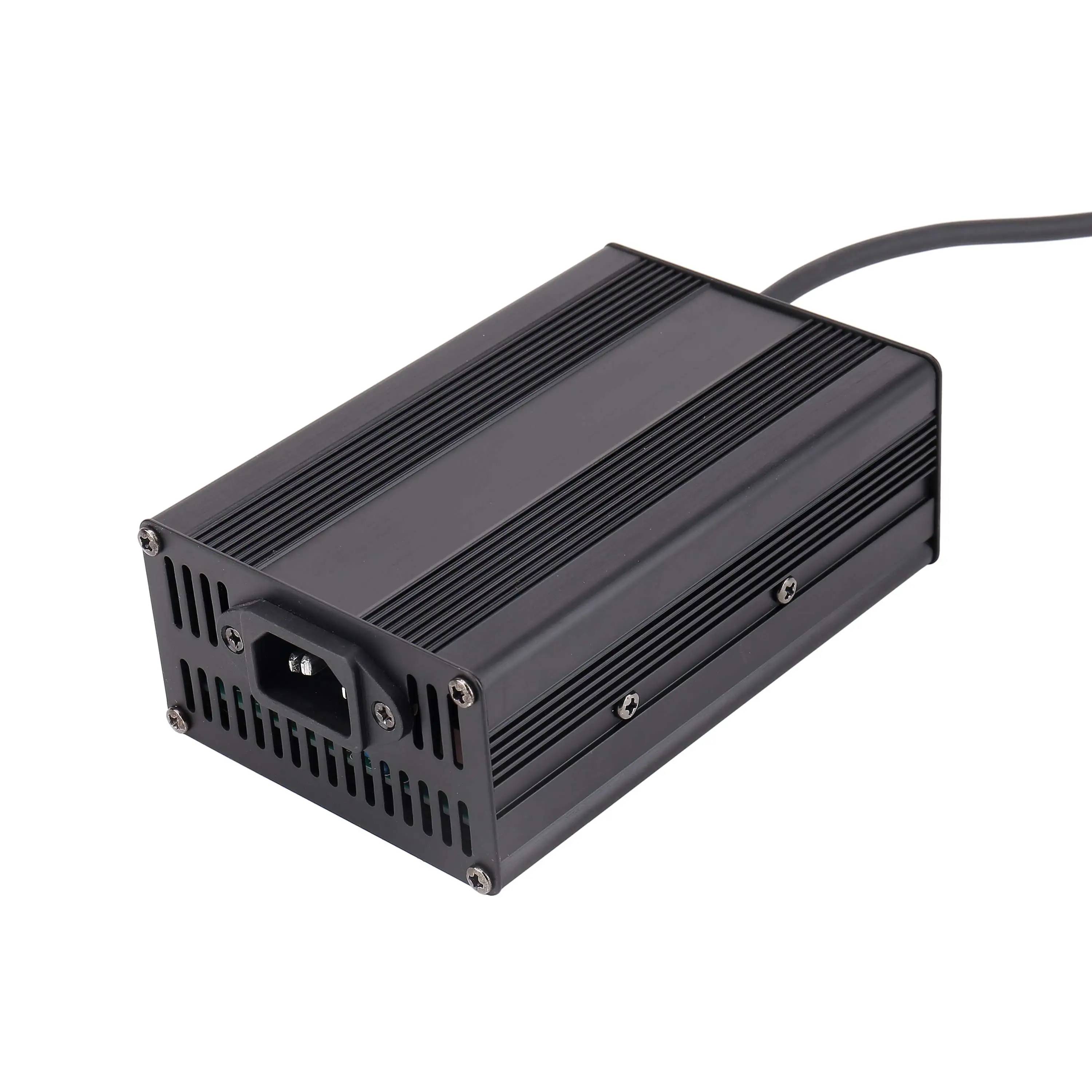
Based on the visible construction, this unit appears to be a compact electronic power module with an enclosed metal housing, ribbed heat-dissipation surfaces, vent slots, and a fixed cable connection. The design suggests a product built around passive cooling and protective enclosure rather than an open-frame layout. That makes it suitable for applications where the power electronics need physical protection and stable airflow paths.
The form factor is rectangular and space-efficient, which is useful for OEM assemblies, replacement chargers, and bench or equipment-side power conversion setups. The visible AC inlet and output cable indicate a cabled power interface, but the exact electrical ratings, output connector pinout, and internal circuit topology are not visible and should be confirmed before purchase or integration.
What This Type of Charger or Power Module Is Used For
In practical buyer terms, a unit like this is often selected when the end user wants a straightforward AC-to-DC power path for battery charging or equipment supply. For e-bike and mobility-related systems, that means a charger that can be connected, monitored, and stored without requiring a large external adapter assembly. In other industrial contexts, the same housing style can be used for low-voltage DC power delivery, test equipment, embedded systems, or service replacement work.
Because the product information supplied here comes from visible features rather than a datasheet, it is best treated as a general power module reference. The safe conclusion is that the device is enclosed, cabled, and thermally managed by its finned housing. The exact role—charger, regulated power supply, driver, or another AC-DC module—must be confirmed from nameplate data or technical documentation.
Visible Specifications and Construction Features
Compact Enclosed Housing
The enclosure is a black metal box with a matte finish and visible corner screws. A construction like this usually supports easier assembly and maintenance, while also helping protect internal electronics from physical contact and dust exposure during normal handling.
Passive Heat Dissipation
The ribbed top and side surfaces are the most obvious design feature. Those fins increase external surface area, which helps dissipate heat from internal components. In power electronics, thermal control is not a cosmetic detail; it affects operating stability and long-term reliability.
Front Panel Connector Area
The front face shows an IEC-style AC inlet or connector area with integrated grounding hardware visible. That suggests a mains-input interface intended for standard cable connection. A fixed cable exits the unit from the rear or top side, ending in a round 3-pin-style connector. The connector type, pin assignment, and output use case are not identifiable from the image alone.
Mechanical Assembly
Visible screws along the corners and sides indicate a serviceable, mechanically fastened structure. This is common in industrial electronics because it supports repeatable assembly and secure closure of the housing.
Materials and Finish Options
The housing appears to be aluminum, likely finished with black anodizing or powder coating. That combination is widely used in power electronics because aluminum is lightweight, conducts heat effectively, and can be formed into finned profiles for thermal performance. The black finish also gives a uniform surface appearance and may help with heat radiation, although actual thermal behavior depends on design details not visible here.
Visible secondary components include metal screws and a molded cable/connector body. For buyers evaluating similar products, finish options often matter for assembly compatibility, corrosion resistance, and brand consistency. If you are sourcing for OEM use, confirm housing material, finish thickness, and any coating compatibility requirements before release.
Manufacturing and Assembly Process
The enclosure likely comes from an aluminum extrusion or similar metal-forming process, followed by machining or stamping for vent openings, connector cutouts, and mounting points. After that, the internal electrical assembly would be installed, the end plates fastened, and the cable strain relief attached. This process is common in compact power supplies because it balances thermal performance, structural strength, and efficient production.
From a manufacturing standpoint, there are a few important checkpoints: enclosure alignment, screw retention, cable exit strain relief, and airflow path consistency around the vented areas. If the unit is being sourced as part of a larger product, these points matter as much as the electrical rating because they affect both installation and durability.
Typical Application Scenarios
Although the exact end-use is not confirmed, the visible design fits several common scenarios:
• Replacement charger for battery-powered equipment
• OEM power module for mobility or light electric vehicle systems
• Industrial electronics power conversion
• Bench or service power use in testing environments
• LED or embedded systems requiring compact enclosed DC power
For buyers in these categories, the main advantage is packaging efficiency. The unit is compact, wired, and enclosed, which can simplify installation compared with exposed internal modules.
Quality Control Considerations
Because the product is an electrical power unit, quality control should focus on both electrical and mechanical consistency. Even without a visible certification list, a buyer should look for standard checks such as enclosure fit, connector integrity, cable retention, screw torque, and burn-in or functional verification where applicable. If the product is intended for charging batteries, output stability and protection behavior should be reviewed in the supplier’s documentation.
At the visual level, confirm that the vent slots are unobstructed, the cable entry is secure, and the housing shows no distortion or sharp-edge risk. For OEM projects, ask for the exact input range, output range, connector type, and enclosure dimensions before specifying the unit in a bill of materials.
Customization Guidance for Buyers
If you are considering a similar enclosed charger or power module for your own equipment, customization often starts with the practical interfaces. Important items include cable length, connector style, housing color, mounting method, and label format. For battery-related applications, the output voltage and current profile must match the battery chemistry and pack configuration exactly. Do not assume a unit is compatible just because it is labeled as universal.
For industrial or OEM procurement, it is also worth confirming whether the housing can be adapted for your airflow, mounting, or ingress protection requirements. Since the visible unit shows venting and passive cooling features, integration into a tightly sealed enclosure may require additional thermal review.
Buyer Decision Factors
Before selecting a charger or power module in this category, compare the following points:
• Verified input and output specifications
• Compatibility with the target battery pack or device
• Connector type and cable length
• Thermal design and enclosure ventilation
• Housing durability and installation method
• Required safety documentation and compliance records
• Serviceability for replacement or field maintenance
These factors help avoid one of the most common procurement problems in power electronics: choosing a product that looks suitable but does not match the real system interface.
Why the Enclosed Metal Design Matters
An open-frame power board may be cheaper, but it also leaves more of the assembly exposed to handling damage and contamination. A finned metal enclosure gives this unit a more robust footprint for transportation, installation, and day-to-day use. The housing also suggests attention to heat management, which is particularly important in a 300W class product where thermal load can become a limiting factor.
For buyers comparing enclosure styles, this is the kind of product that fits applications where reliability and packaging convenience matter more than minimal cost or bare-board access.
Request the Right Version for Your Application
Because the visible unit does not reveal exact electrical ratings, the safest next step is to request the full specification sheet before ordering. Ask for input voltage, output voltage, output current, connector details, protection functions, and dimensional drawings. If you are sourcing for an e-bike system or another battery-powered platform, matching these details is essential for safe operation and proper charging behavior.
Contact the supplier with your required voltage range, connector preference, and installation constraints so the correct configuration can be confirmed before production or replacement purchase.