72W E-Bike & Electric Scooter Battery Charger (24V/36V) – CE UL Certified Manufacturer
A 72W E-Bike & Electric Scooter Battery Charger (24V/36V) is designed to solve a very practical problem: keeping a battery-powered vehicle ready for daily use without relying on an oversized, inefficient, or incompatible power supply. For OEMs, distributors, and repair channels, the right charger must match the battery system, fit the target market’s plug standard, and integrate safely into a repeat-purchase product line. The power adapter structure shown here reflects the common external charger format used for compact electric equipment: a molded black housing, fixed cable, and low-profile brick design that is easy to package, ship, and replace.
Product Overview
This type of charger sits between wall power and the battery pack, converting AC input into controlled DC output for charging. In the e-bike and electric scooter market, that means the buyer is usually looking for a dependable external charger that can be paired with a specific battery voltage and connector style. The visible construction indicates a compact inline adapter assembly with an injection-molded enclosure, a textured top surface, and integrated cable exit points for strain relief.
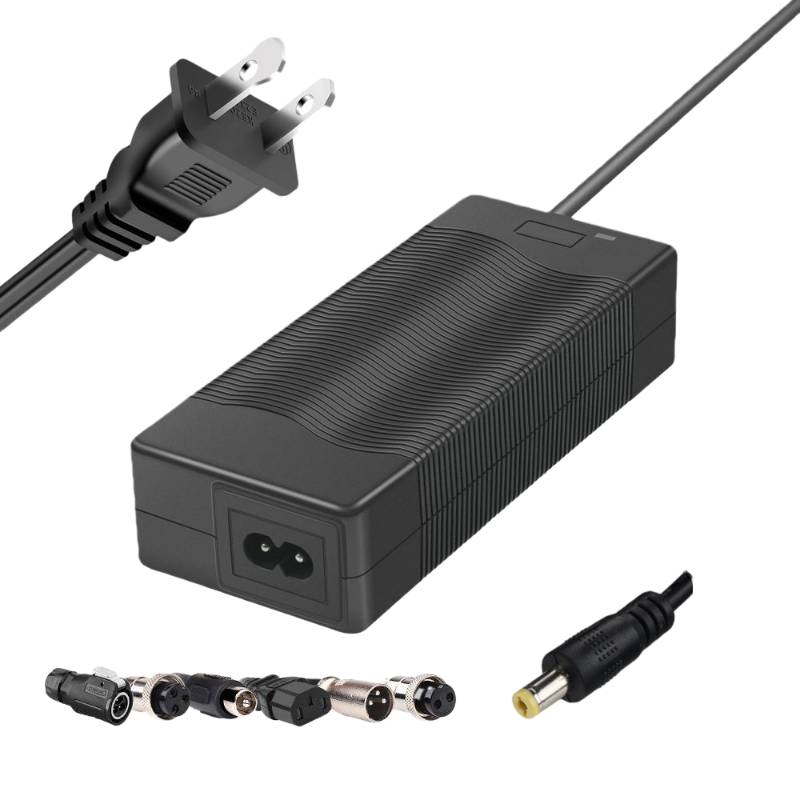
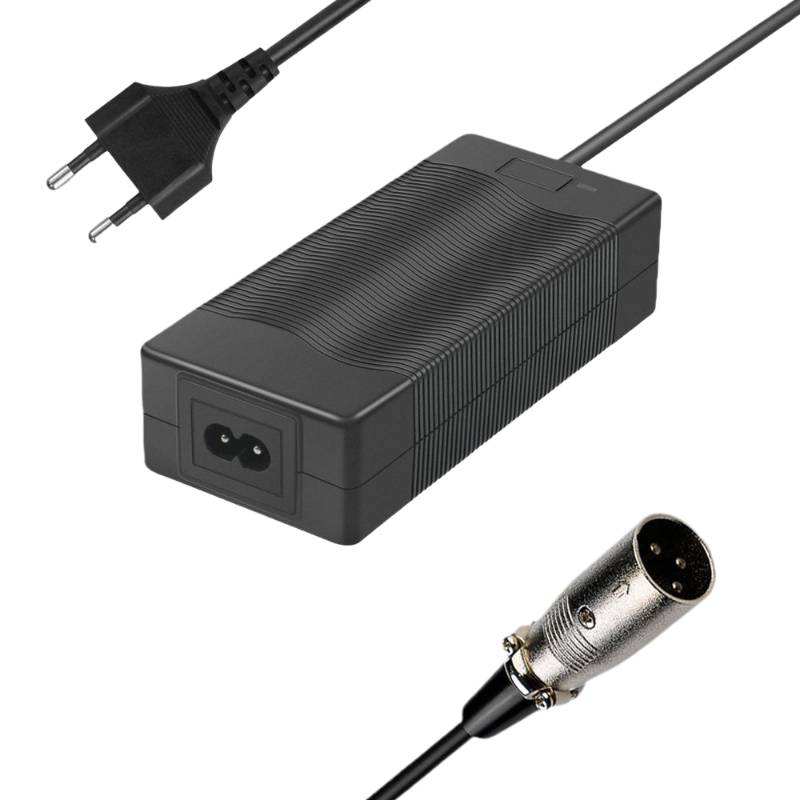
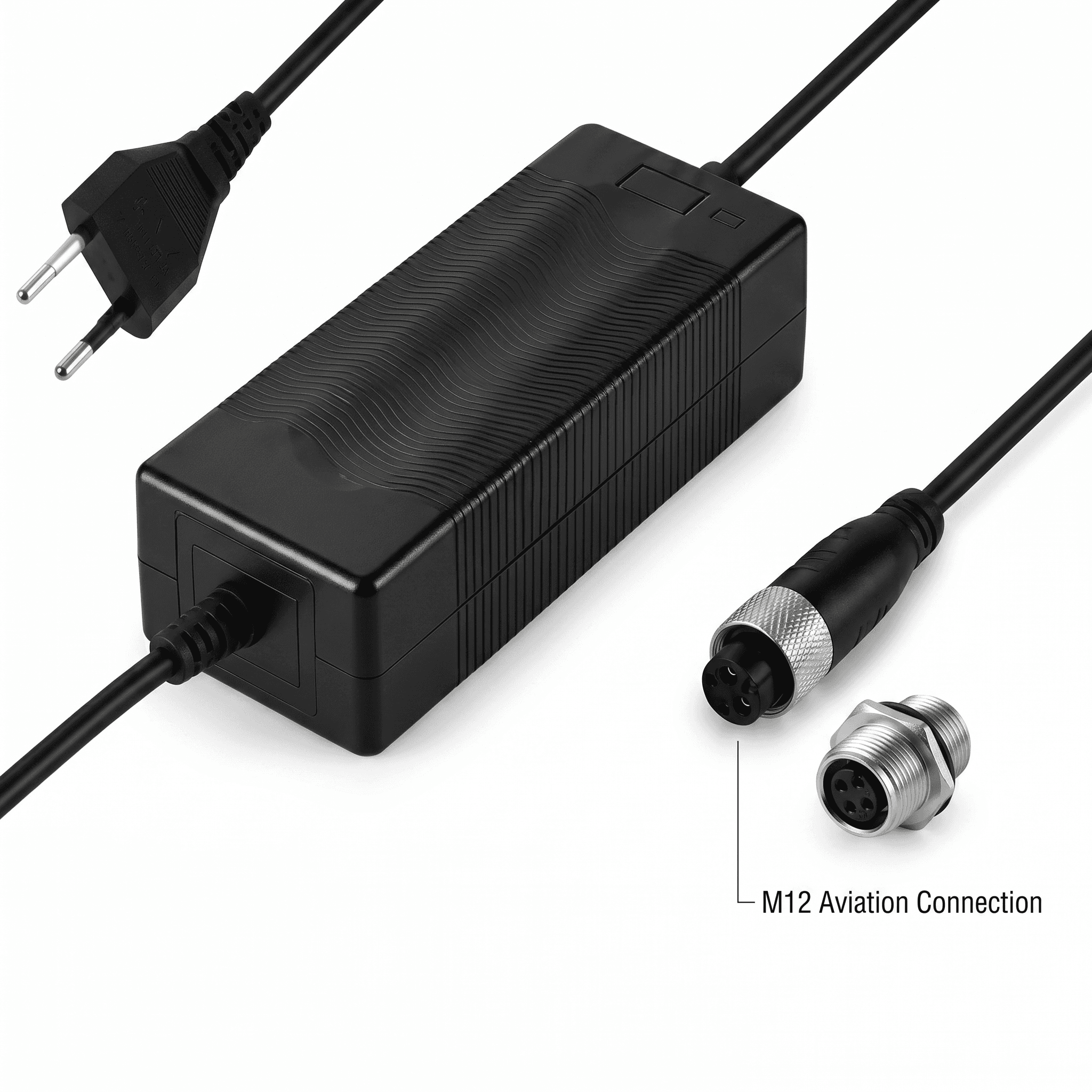
The image shows a black rectangular power unit with a matte finish, a wavy or ribbed top, and a cable-connected form factor. These features are common in external battery chargers because they balance durability, handling comfort, and efficient use of space. The exact output rating, polarity, and connector dimensions are not visible in the photo, so those details should be confirmed at the specification stage before procurement or integration.
What Buyers Typically Need From This Product
For a battery charger to work well in an e-bike or scooter program, it must do more than simply power on. Buyers usually need three things: correct electrical matching, stable field performance, and a housing design that supports everyday use. If the charger does not match the battery chemistry, voltage, or connector standard, it can cause slow charging, compatibility complaints, or avoidable returns. If the enclosure is bulky or fragile, it becomes difficult to stock, label, and support after sale.
This is why external charger formats remain popular. They are easier to replace than internal power modules, simpler to test during incoming inspection, and flexible enough for different markets when cable or connector variants are required. The visible brick-style housing also suggests a practical manufacturing approach for OEM and replacement use.
Key Specifications and Visible Capabilities
Form factor
The adapter uses a compact rectangular brick shape with rounded edges. That layout is common for portable charger assemblies because it supports efficient storage and lowers the chance of damage during transport.
Housing and surface design
The black molded plastic enclosure appears matte to semi-matte, with a ribbed or wave-textured top surface. Side grooves and molded seams are visible, suggesting a clamshell-style enclosure. While the internal electronics are not visible, this type of enclosure is typically used to house conversion circuitry and thermal components in a sealed consumer-grade power supply.
Input and output interface
The image shows a mains-side connector area and a cable-based output side. One view appears to show an IEC-style figure-8 interface or similar AC connection face, while another shows a fixed two-prong AC plug style. Because the photo set includes multiple views or examples, the exact input configuration should be confirmed for the intended region. The output side shows a barrel-style DC connector and several interchangeable connector tips in the visual set, but exact dimensions are not readable.
Power rating note
The product name references 72W and 24V/36V charging, but those values are not visually verifiable from the provided images. Any buyer should confirm the output voltage, current, and charging profile against the battery pack specification before ordering.
Materials and Finish Options
From the visible product information, the enclosure is likely molded from industrial plastic, commonly chosen for electrical insulation, impact resistance, and cost-effective mass production. The finish is black and low-gloss, which helps the unit look clean in retail and OEM settings while reducing the appearance of scuffs.
The cable jacket appears to be a black insulated polymer, likely PVC or a similar material used in general power cords. Metal contact surfaces are visible on the plug elements. If you are specifying a custom version, common finish-related options in this product category include housing color, cable jacket color, labeling style, connector overmold design, and strain-relief shape. None of those are confirmed here, but they are typical customization points for external chargers.
Manufacturing Process
This charger belongs to a standard electrical assembly category that usually combines plastic molding, internal circuit assembly, cable termination, and final electrical testing. The visible shell strongly suggests injection molding. Two-part enclosure seams indicate a clamshell structure that is assembled around the internal power conversion components. The cable exits appear molded with strain relief, which is important for repeated flexing during daily use.
In a manufacturing workflow, the usual sequence includes enclosure tooling, PCB and transformer assembly, cable preparation, connector assembly, housing closure, and outgoing test verification. For chargers used in electric mobility products, testing normally focuses on output stability, connector continuity, insulation integrity, and functional charge behavior. Exact test results are not provided here, so they should not be assumed.
Application Scenarios
Although the page title focuses on e-bike and electric scooter battery charging, the same charger architecture is often used across several low-voltage electronic categories. The product style shown is suitable for equipment that accepts an external adapter and uses a DC charging or power input. Common application scenarios include:
e-bike battery charging stations for replacement or fleet maintenance
electric scooter charging for consumer, rental, or service inventory
small electronics and peripheral power supply replacement
OEM accessory bundles that require a compact external adapter
multiple-tip systems where connector flexibility is needed
Because connector type and output specifications are not visible, compatibility with a specific battery pack or device must be verified before use.
Quality Control and Buyer Checks
For B2B buyers, the most important quality questions are usually straightforward: does the adapter deliver the right voltage, does it remain stable under load, do the plugs fit, and does the housing hold up in normal handling. A charger in this format should be checked for cable retention, connector fit, enclosure finish, and label accuracy. If the application is e-bike or scooter charging, additional verification around battery chemistry and charge termination is essential.
When sourcing this product, ask for the following before approval: output electrical specification, plug standard, connector size, cable length, and any compliance documents relevant to your destination market. The user prompt mentions CE and UL certification, but no certificate evidence is visible in the supplied image data, so certification status should be documented by the supplier rather than assumed from appearance.
Customization Guidance for OEM and Distribution Projects
Buyers often need more than a standard charger shell. A private-label or OEM program may require a connector that matches a target battery dock, a cable length that suits retail packaging, or a housing label that clearly communicates input and output data. If the product is being sourced for multiple regions, plug style and input compatibility become especially important.
Useful customization points in this category typically include connector tip selection, cable gauge, outer jacket color, printed logo, safety labeling, carton design, and bundled accessories. If your project involves replacement chargers, it is also worth standardizing connector geometry and polarity across the assortment to reduce field support issues.
Buyer Decision Factors
Before choosing a charger like this, compare it against the battery pack and the end-use environment. The main decision factors are not cosmetic; they are electrical and logistical. Check battery voltage first, then confirm current rating and connector fit. Review whether the charger will be sold as a single-market unit or a multi-region SKU. Consider whether the product must support retail display, spare-parts distribution, or OEM bundling.
For high-volume buyers, another practical question is serviceability. A compact external charger is easier to replace than a built-in unit, which can reduce downtime for the end user. The brick-style design shown here also helps with warehousing because it stacks well and typically ships with fewer packaging complications than irregular-shaped electronics.
Request a Quotation or Specification Review
If you are sourcing a 72W E-Bike & Electric Scooter Battery Charger (24V/36V) for OEM, wholesale, or replacement supply, the best next step is to confirm the electrical spec, connector standard, and regional input requirements before production. Share your battery voltage, connector photo, target market, and label requirements, and the supplier can align the adapter configuration to your application.
For procurement teams and product managers, this is a category where small details matter. Confirm the charger match early, and you reduce returns, simplify support, and keep the battery system usable in the field.