85W E-Bike Battery Charger (24V/36V/48V) – Bosch Compatible | CE UL Certified Manufacturer
An 85W E-Bike Battery Charger (24V/36V/48V) – Bosch Compatible | CE UL Certified Manufacturer is built to solve a simple but important problem: keeping an e-bike ready to ride without risking battery mismatch, unstable charging, or the inconvenience of using an unsuitable replacement adapter. For buyers sourcing replacement or OEM charging hardware, the key challenge is finding a charger format that fits the target system, matches the connector requirements, and supports dependable day-to-day use in a compact housing. This type of charger/power adapter is commonly selected for accessory replacement, private label programs, and device bundles where a fixed-cable power unit is needed.
Product Overview
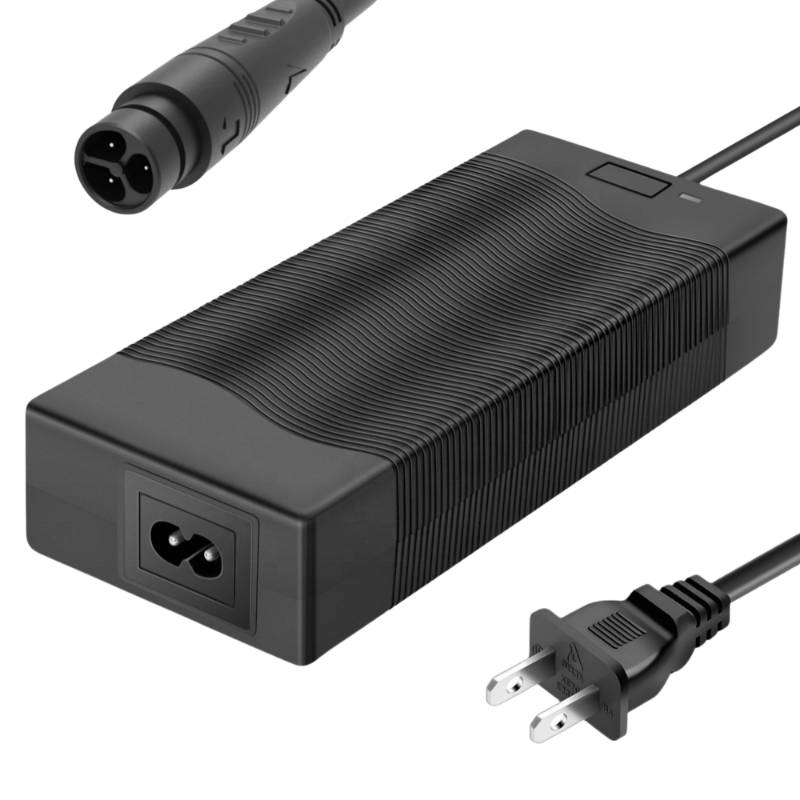
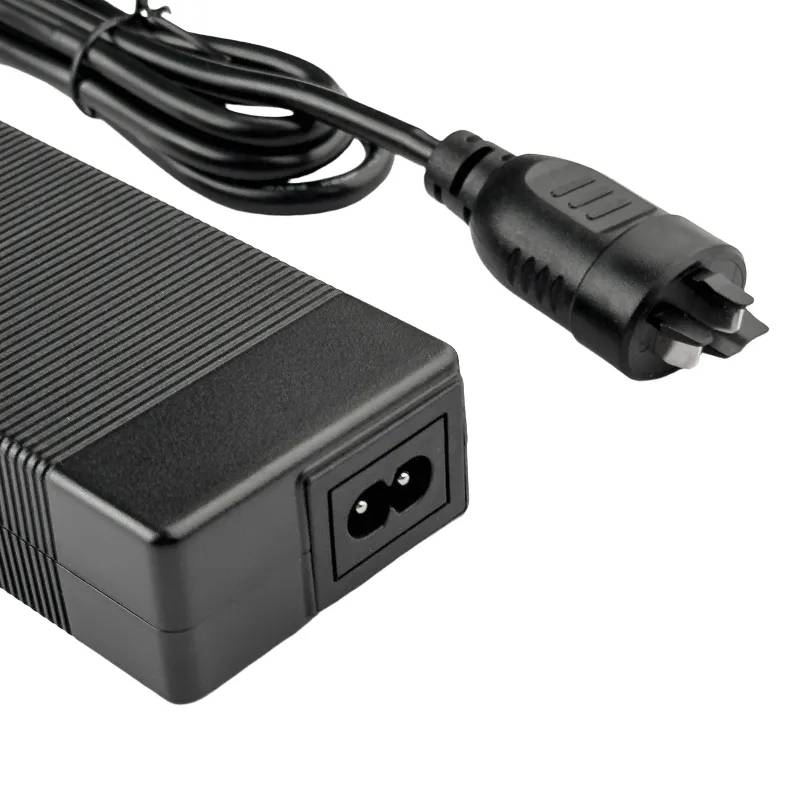
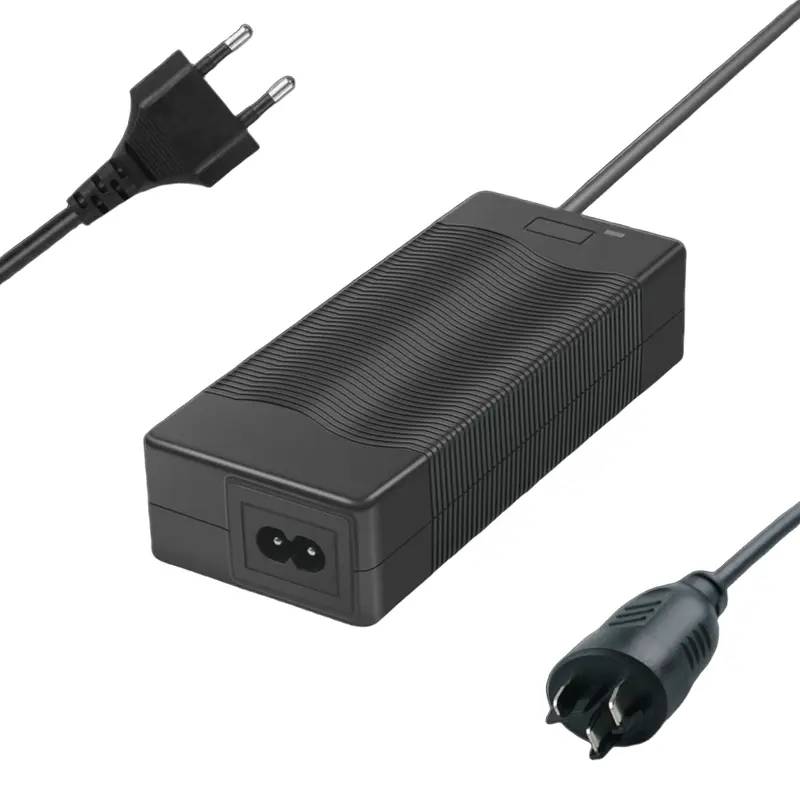
Based on the visible product structure, this unit is a compact rectangular inline power supply or external charger brick with an attached cable and a molded black enclosure. The body has rounded edges, a ribbed top surface, and vertical side grooves that improve grip and give the housing a technical, utility-focused appearance. One end shows an AC inlet-style opening on the face of the adapter body, while a fixed lead exits from the opposite side. The overall format is typical of external power electronics used to convert mains power into a lower-voltage output for connected equipment.
Because the image does not expose the rating label, the exact output voltage, current, wattage verification, polarity, and connector compatibility should be confirmed from the specification sheet before purchasing. If this product is being positioned for e-bike applications, the buyer should verify the charging profile and matching interface for the intended battery system, especially when compatibility claims such as Bosch-compatible are part of the sourcing brief.
Key Specifications and Visible Capabilities
Form factor
The charger uses a rectangular inline brick design, which is practical for shelf storage, replacement inventory, and OEM packaging. The compact body can be mounted or carried easily compared with larger ventilated metal chargers, and the fixed cable reduces loose-part handling during installation.
Housing structure
The enclosure appears to be injection-molded plastic with a clamshell seam around the middle. The matte black finish is suitable for consumer electronics, repair replacement channels, and industrial accessory kits. Ribbing on the top and sides may help with handling and can visually suggest thermal management, although hidden internal heat performance cannot be assumed from appearance alone.
Connection style
Visible cabling suggests a corded input/output arrangement rather than a detachable modular design. The front face shows a two-pin IEC C8-style figure-8 inlet/receptacle shape, but this should be confirmed from engineering drawings because the image alone does not identify the full electrical interface. A European two-round-pin mains plug is also visible on one cable end, and a separate small device-side connector appears on another lead, though its exact type is not readable from the image.
Power range positioning
The product title indicates 24V/36V/48V use and an 85W class. For procurement, the practical meaning is that the charger is intended for low-voltage battery charging applications where output matching matters more than generic power delivery. Buyers should confirm whether the unit is a charger with a defined charging algorithm or a power supply for a system that performs charging internally.
Materials and Finish Options
The visible unit appears to use a black molded plastic enclosure. In this product category, plastic housings are often chosen for insulation, weight reduction, and cost-efficient assembly. The visible finish is matte to semi-matte, which helps reduce fingerprints and gives the part a serviceable look in OEM or replacement use.
For custom sourcing, finish options may include slight texture changes, enclosure color adjustments, branded label placement, and cable jacket color selection, depending on the manufacturer’s tooling and assembly process. Exact material grade, flame-retardant rating, and surface treatment should be confirmed through documentation rather than inferred from the photo.
Manufacturing and Assembly Process
This type of power adapter is generally produced through a combination of enclosure molding, internal power electronics assembly, cable preparation, and final electrical testing. The outer shell is typically injection molded and then assembled around the internal board, transformer, filtering components, and protection circuitry. Cable exits are commonly strain-relieved with molded grommets or overmold features to reduce bending stress at the connector points.
For an e-bike charger product line, assembly control matters as much as the housing. Consistent soldering, proper insulation spacing, cable crimp quality, and end-of-line verification are all important for stable performance. Buyers comparing suppliers should ask how the factory handles component sourcing, insulation checks, polarity confirmation, and sample validation for the target battery system.
Application Scenarios
This charger/power adapter format is relevant to several buying scenarios:
Replacement charger supply for e-bike users who need a direct replacement unit with matching output and connector requirements.
OEM and ODM accessory bundles for bicycle brands that ship a battery and charger together.
After-sales parts programs for distributors, repair centers, and spare-parts retailers.
General low-voltage charging and external power delivery where a compact adapter brick is preferred over an open-frame design.
In every case, the correct fit depends on the battery’s voltage class, charging protocol, connector geometry, and safety requirements. A charger that looks similar externally may still be incompatible electrically.
Quality Control and Safety Considerations
For power electronics, quality control should cover electrical output verification, insulation integrity, cable strain relief, connector fit, and basic functional checks at the end of the line. If the product is sold into regulated markets, buyers often request compliance documentation and test reports that support the sales region. The prompt mentions CE and UL certified manufacturer positioning, but those claims should only be presented when supported by supplied documentation for the exact model.
When evaluating a supplier, ask whether testing includes open-circuit behavior, load stability, polarity confirmation, and overheating protection checks. For e-bike charging applications, battery safety is a major purchasing factor, so consistent output control and connector accuracy are more important than cosmetic details alone.
Customization Guidance for Buyers
If you are sourcing this charger for a brand, repair channel, or retail program, customization often starts with the electrical specification. Confirm the nominal output voltage, current rating, and connector type before discussing packaging or branding. Once the electrical base is fixed, you can usually consider housing color, logo application, label content, cable length, plug region, and retail packaging design.
For Bosch-compatible positioning, the buyer should define compatibility carefully. Compatibility can involve connector geometry, battery communication, and charging profile, not just physical appearance. If the product is meant for multiple regions, ask whether the input plug can be adapted for different markets and whether the output lead can be supplied in a region-specific version.
Buyer Decision Factors
When comparing suppliers, focus on the following points:
Confirm the real output specification rather than relying on the housing style or product title.
Verify connector matching with the target e-bike battery or charging interface.
Check whether the unit is a true charger with charging logic or only an external power adapter.
Review available compliance documents for the exact model being purchased.
Assess cable length, plug region, and packaging requirements for your sales channel.
For B2B procurement, these details reduce returns and prevent field compatibility issues. A visually similar power brick can fail in practical use if the connector or charging profile is wrong.
Why This Product Format Works Well in the Market
The inline charger brick remains popular because it balances simplicity, compact size, and easy replacement logistics. It is familiar to technicians, easy to pack, and straightforward to store in inventory. The rigid housing also protects internal electronics better than exposed-board solutions, which is useful in consumer replacement and accessory sales.
For e-bike programs specifically, the format supports a clean ownership experience: one charger, one cable set, and a clear replacement path when a unit is lost or damaged. That makes it a practical SKU for distributors and service networks.
Request a Quote or Specification Review
If you need an 85W e-bike charger or a compatible external power adapter for OEM, replacement, or accessory distribution, send the target battery model, required output rating, connector photo, and market destination. The right supplier can then confirm whether the unit matches your charging requirement and supply the correct version for your channel.
Share your specification sheet or sample request details to begin sourcing the correct charger configuration.