48W E-Bike & Scooter Battery Charger (24V/36V/48V) – CE/UL Certified Manufacturer
If you are sourcing a 48W E-Bike & Scooter Battery Charger (24V/36V/48V) – CE/UL Certified Manufacturer, the main buying problem is usually straightforward: you need a compact external power unit that matches the device connector, provides stable low-voltage output, and fits the application without adding unnecessary bulk. For electric bikes, scooters, and other low-voltage equipment, the wrong adapter can mean slow charging, connector mismatch, or unreliable operation. This style of charger/power supply is designed to solve that compatibility challenge with an enclosed plug-in form factor and an integrated output lead.
Product Overview
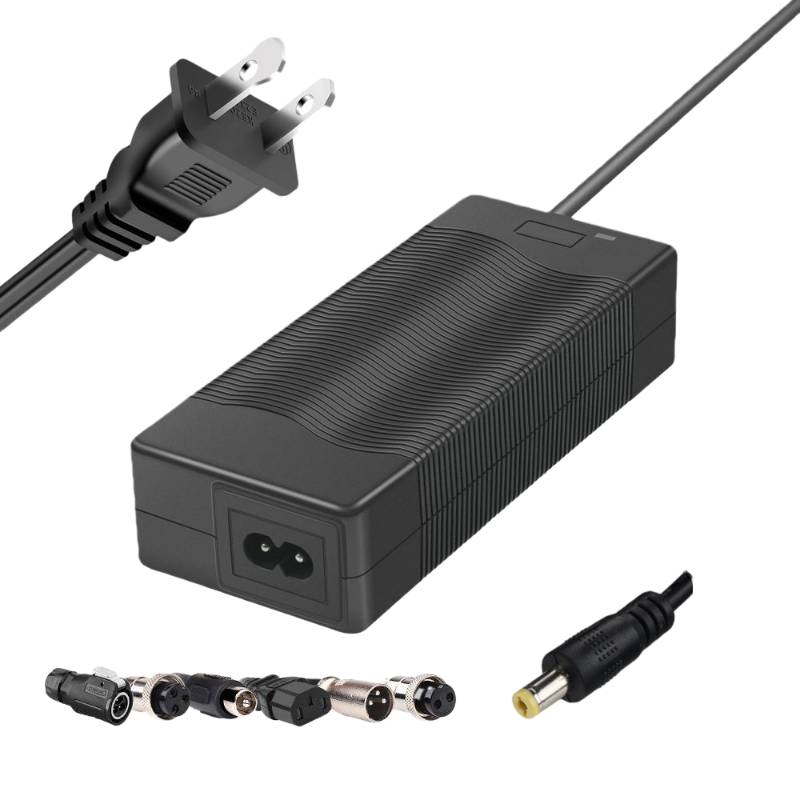
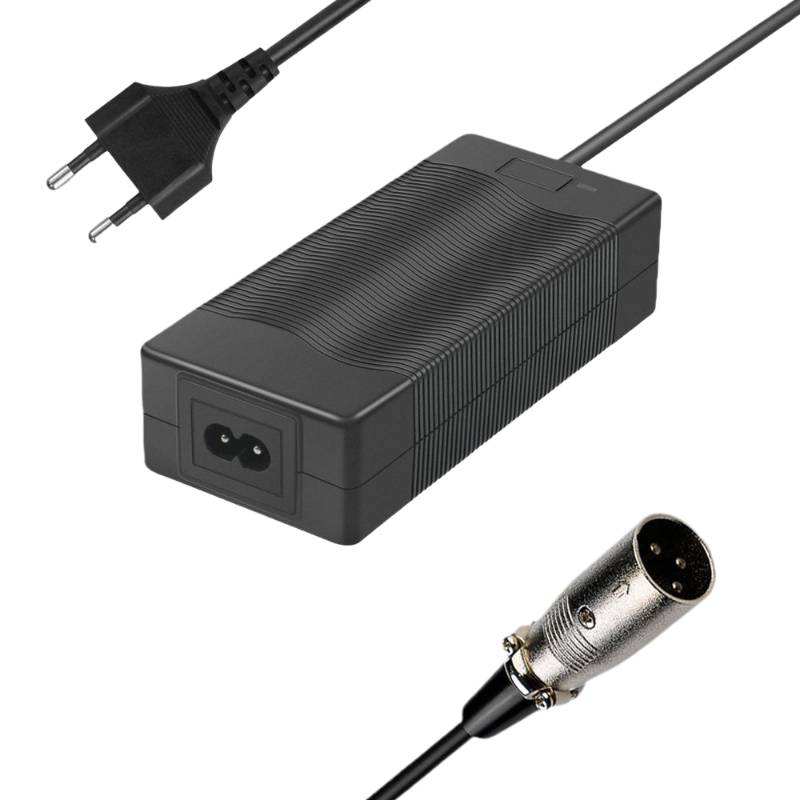
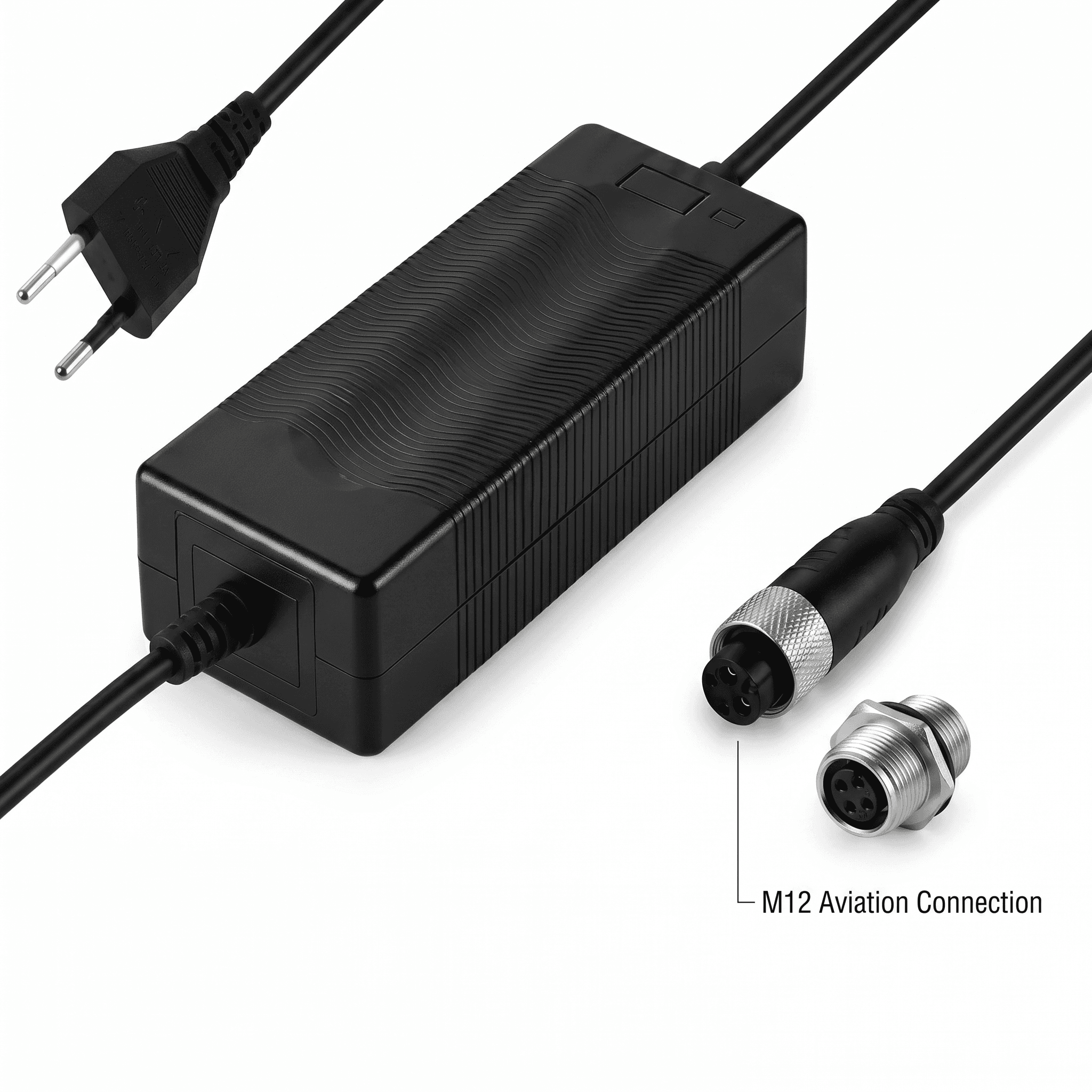
Based on the visible structure, this product is a black inline AC/DC power adapter or external power supply brick with an attached cable. It has a rectangular molded housing, a textured top surface, ribbed side walls, a fixed mains input cord with a 2-pin European plug, and a circular 3-pin XLR-style output connector on the cable end. The front face also shows an IEC-style figure-8/C8-type AC inlet on the adapter body. Those external details make it suitable as a replacement or OEM power solution for devices that require a matching low-voltage power interface.
Because the internal circuitry and electrical label are not visible, exact output voltage, current rating, polarity, and wattage cannot be confirmed from the image alone. For procurement, that means the connector and electrical spec must be verified against the target device before ordering.
What This Charger/Adapter Is Designed to Do
An external power adapter converts wall AC input into a usable low-voltage output for connected equipment. In the e-bike and scooter context, this can support battery charging systems or related low-voltage electronics, provided the voltage, current, and connector match the device requirements. For other industries, the same power-supply format may be used for audio gear, lighting accessories, broadcast devices, office equipment, or small electronic systems that use a 3-pin XLR-style input.
The buyer value is not just power delivery. It is also physical compatibility, cable management, and a simple external enclosure that keeps the power conversion section off the main device. That helps reduce enclosure complexity on the equipment side and can make replacement easier in the field.
Visible Specifications and Construction Features
Housing and form factor
The adapter uses a compact rectangular block design with a black plastic enclosure. The surface finish appears matte to semi-matte, which is common for molded power supply housings because it hides scuffs and handles repeated use well. The top has a ribbed or wavy texture, while the sides show vertical ribs that may aid handling and can also support heat dissipation by increasing surface area.
Connector layout
One end shows a mains input arrangement with a two-pin European plug visible on the cord, and the body includes a figure-8/C8-style inlet. The opposite end appears to terminate in a 3-pin XLR-style connector. That connector style is often selected when a secure locking connection is needed and when the system design benefits from a keyed plug that reduces accidental disconnection.
Integrated cable design
The power lead is attached rather than detachable in the visible configuration. For buyers, an integrated cable can simplify assembly and reduce the number of loose parts in packaging or installation. It also means cable length, connector orientation, and strain relief should be confirmed during specification review.
Materials and Finish Options
The visible enclosure is made from molded black plastic, which is a standard material choice for external adapters because it balances cost, durability, and electrical insulation. The connectors appear to include metal contact hardware on the XLR-style end, as expected for a power connector assembly.
If you are comparing supplier options, finish and housing texture matter more than many buyers expect. A matte black shell generally offers practical benefits in commercial use: fewer visible scratches, less glare in retail or studio environments, and a more neutral appearance when the adapter sits near equipment. The visible ribbing also gives the enclosure a more technical, utilitarian profile rather than a smooth consumer-style surface.
Manufacturing Process and Assembly Considerations
The visible product type is consistent with an injection-molded electrical enclosure assembly. In a typical production flow, the plastic housing is molded, internal electrical components are assembled, wiring is routed, and connectors are fitted at each end. The enclosure is then closed with a housing seam, and the final unit is checked for fit, electrical continuity, and basic functional operation.
For OEM and private-label buyers, the manufacturing process may be adapted to different output ratings, connector types, cable lengths, and regional plug standards. However, those details must be specified explicitly. Do not assume that a product with similar appearance has the same electrical characteristics as another unit.
Application Scenarios
E-bike and scooter charging systems
For mobility products, the main requirement is consistent matching between charger output and battery system input. This adapter format can support that role when the electrical specification is confirmed and the connector is compatible.
Replacement adapter use
Many buyers search for a replacement when the original unit fails, is misplaced, or becomes unavailable. In that case, the key decision factors are voltage, current, connector standard, and polarity. A replacement only works properly if all of those match the target device.
Other low-voltage equipment
Outside mobility products, a 3-pin XLR-style power connector may appear in pro audio, lighting, and specialized electronic equipment. The compact external adapter format is useful wherever internal power conversion is not preferred.
Quality Control and Buyer Verification Points
For this type of power adapter, quality control normally focuses on housing integrity, connector fit, cable retention, and electrical stability. Since exact certifications, efficiency, and test data are not visible here, buyers should ask for documented confirmation rather than assuming compliance from appearance alone.
When evaluating samples or production units, check the following:
- Connector compatibility with the receiving device
- Output voltage and current rating on the nameplate
- Input voltage range for the target market
- Polarity and pin assignment
- Cable length and strain relief quality
- Housing closure, seam alignment, and external finish
- Any requested regulatory documentation, if required by your market
If CE or UL documentation is needed for your project, request the actual supporting files and confirm the exact model configuration being supplied. Certification should be tied to the specific electrical design, not just the exterior form.
Customization Guidance for OEM Buyers
In manufacturing supply discussions, this product category is often customized by output spec, connector style, cord length, housing color, labeling, and regional plug type. A buyer should prepare a clear specification sheet before requesting samples. At minimum, include target voltage, current, connector pinout, application environment, and any packaging or branding requirements.
If your application is an e-bike or scooter battery charging project, also define the battery chemistry, charging profile requirements, and whether the charger is meant for daily use, replacement service, or bundled retail sale. Those details determine whether the power supply is only a simple adapter or a true battery charger with the correct charge behavior.
How to Choose the Right Unit
The right selection comes down to compatibility and usage environment. Buyers should prioritize the actual electrical rating over appearance. A compact black adapter can look similar across many product lines, but the internal design may vary widely.
Use these questions during sourcing:
- Does the output voltage match the equipment requirement?
- Is the current rating sufficient for the load?
- Does the connector type and pinout match exactly?
- Is the plug format suitable for the destination market?
- Will the enclosure and cable length work in the final installation?
- Do you need a replacement part or a custom OEM version?
When those points are confirmed, procurement becomes much safer and product returns are less likely.
Request a Quote or Technical Confirmation
If you are evaluating this adapter for production, replacement, or distribution, send your required voltage, current, connector details, and market standard so the correct version can be confirmed. For buyers looking for a 48W E-Bike & Scooter Battery Charger (24V/36V/48V) – CE/UL Certified Manufacturer, the next step is matching the electrical specification to the application and verifying the exact connector and plug standard before final approval.
Contact us with your target model details, and we can help you determine whether this product format fits your device or whether a customized version is needed.